1780, a group of slaves flee from a sugar cane hacienda. As they are pursued by Don Manuel Aguirre, obsessed landowner who has fixed his eyes on Azu, the beautiful slave with an ancestral destiny.
A young officer in the army of Empress Catherine of Russia is on his way to his new duty station at a remote outpost. During a blinding snowstorm he comes upon a stranger who was caught in the storm and is near death from freezing. He rescues the man and eventually brings him back to health. When the man is well enough to travel, the two part company and the man vows to repay the officer for saving his life. Soon after he arrives at his new post, a revolt by the local Cossacks breaks out and the fort is besieged by the rebels. The young officer is astonished to find out that the leader of the rebellious Cossacks is none other than the stranger whose life he had saved during the storm.
Perhaps the most notorious concubine in Chinese history, Yang Guifei set a pudgy standard of beauty in her days of glory during the Tang dynasty. The Emperor Minghuang was so besotted with the woman that when An Lushan stages his rebellion against the empire, the ruler takes Yang Guifei along with his imperial entourage in an escape to the mountainous area of modern-day Sichuan, and sanctuary of sorts. But the concubine had roused the jealousy of the court and unfortunately for her and to the great sorrow of the king, her brother and others among the king's retainers demanded she be strangled to death while they were still in the mountains. This is the story told in this interesting Taiwanese adaptation by director Li Han-hsiang (Li Hanxiang).
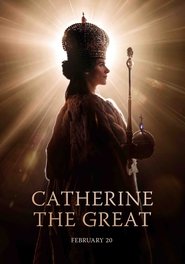
The era of palace coups in Russia ended with the coronation of a prominent historical figure: Catherine the Great. She could have settled for the role of Emperor’s wife, but her persistence and determination eventually proved that her rightful place was on the throne. She was still a child when she learned that she was to marry Peter III and produce an heir. Catherine, however, wanted to rule Russia herself. She saw the potential of the Russian Empire, and she wanted to implement the ideas of the Enlightenment. Will Russia experience a renaissance of culture and sciences under Catherine? Will her ideas eventually play to her detriment?
In 1937, near the border between the Dominican Republic and Haiti, a young Haitian woman named Marie is expecting her first child with Frank, her doting Dominican husband. After her mother's burial, she is awakened in the middle of the night by distant screams. The immediate execution of all Haitians on Dominican soil has been ordered — the so-called “Cut” — and what seals a victim’s fate is whether or not they can pronounce "perejil" (parsley). Marie takes off to find Frank in the next town over, with nothing but the clothes on her back.
Twins Ronnie and Reggie Kray are raised in east London, under the influence of their hateful but doting mother Violet. As they grow up, Ronnie's violent nature takes over, and Reggie follows his brother's lead. The two become notorious crime lords who rule over the East End club scene. But at the height of their power, the brothers veer into different lives, giving the older crime bosses a chance to reclaim what the Krays took from them.
Five American soldiers fighting in Europe during World War II struggle to return to Allied territory after being separated from U.S. forces during the historic Malmedy Massacre.
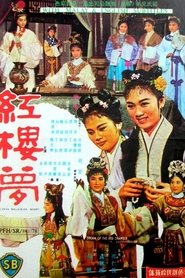
The Ching Dynasty novel The Dream of The Red Chamber is not only the most widely read, but also the most filmed book in Chinese history. The sprawling love story has proven a challenge to many filmmakers, but this version is acclaimed as the most successful. A sumptuous feature which took three years of planning and another for production, it was a hugely popular and critical hit which still stands out as a classic of both 18th century literature and 1960s moviemaking.
In 1870s Texas, a ruthless bounty hunter and an Irish desperado flee the law with a young criminal claiming to possess a treasure more valuable than gold. Crossing paths with some of the West’s most notorious figures, the three outlaws fight for their lives in the pursuit of fame and fortune. Fueled by an ensemble cast and inspired by actual events, THE LEGEND OF HELL’S GATE blends legend and history into a Western spectacle that recounts a treacherous existence in post Civil War Texas.
Discovering Paris under the German occupation through the story of an SS soldier and more generally of Wehrmacht soldiers allows us to follow the daily life on the German side. These soldiers enjoyed privileged status, during their stay, they were led to believe that they belong to a social elite, a status unreachable back in Germany during peacetime. And who better than a German who has led such lifestyle to serve as a common thread and tell this story?
In Footsteps, Fiona Tan creates connections between personal stories and the world around us. The footage shows children at play and Dutch windmills, but above all people engaged in heavy physical labour in the countryside and in factories. In a fascinating juxtaposition, she combines these images with excerpts from letters she received from her father just after she moved to the Netherlands in the late 1980s. Through his education in Indonesia, Tan’s father knew a lot about the Netherlands without ever having visited the country. In the letters, he meanders seamlessly between personal news and world events, such as the fall of the Berlin Wall and the Tiananmen Square protests in Beijing.
The woman who will become Catherine the Great marries into the Russian royal family when she weds Grand Duke Peter, the nephew of Empress Elizabeth. Although the couple has moments of contentment, Peter's cruel and erratic behavior causes a rift between him and Catherine. Mere months after Peter succeeds his aunt as the ruler of Russia, a revolt is brewing, and Catherine is poised to ascend to the throne as the country's new empress.
Democratic Kampuchea (Cambodia) - 1978. Three French journalists are invited by the Khmer Rouge to conduct an exclusive interview of the regime's leader, Pol Pot. The country seems ideal. But behind the Potemkin village, the Khmer Rouge regime is declining and the war with Vietnam threatens to invade the country. The regime is looking for culprits, secretly carrying out a large scale genocide. Under the eyes of the journalists, the beautiful picture cracks, revealing the horror. Their journey progressively turns into a nightmare. Freely inspired by journalist Elizabeth Becker's account in When the war was over.
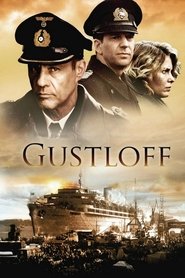
Joseph Vilsmaier Two-part TV movie focuses on the tragic events surrounding the sinking of the Wilhelm Gustloff, a German passenger ship, at the end of World War II. On 30 January 1945, Captain Hellmuth Kehding was in charge of the ship, evacuating wounded soldiers and civilians trapped by the Red Army. Soon after leaving the harbor of Danzig, it was hit by three torpedoes from the Soviet submarine and sank in less than an hour.
Park Jae-sang was a royal geomancer, who helps people designate propitious site for houses, store and even graves under the belief that a grave in a good site will bring future fortune for descendants. But he loses his family because he exposed a conspiracy about crown Prince's grave site. Park Jae-sang plans to make a revenge of his family and learns that there is a much bigger conspiracy about propitious grave site; the place that would make grave owner's son the King of Joseon.
In the foundation of the culture of Japanese MANGA and animation, there lies the humor filled art form, shunga. Shunga is a type of Japanese art by famous ukiyo-e artists of the Edo Period, such as Utamaro, Hokusai, and Kiyonaga, but the artform’s development was thwarted by social norms that tabooed sex. The film Introduces the world of shunga through enthusiasts - collectors, curators, and scholars, including Andrew Gerstle who inspired The British Museum’s historical shunga exhibition in 2013 and Michael Fornitz who owns an auction house in Denmark. Exploring the significance of shunga by analyzing it from historical, cultural, artistic and contemporary female points of view.
Piedmont (Italy), nineteenth century. In Turin, the priest Don Bosco, a man from a humble farming family, he gave himself totally and passionately to the task of collecting from the streets to marginalized children and care for them. Not only out of poverty, ignorance and social distress, but it got for the first time, to feel loved. He fought with extraordinary faith and tenacity to overcome obstacles and snares that both the civilian and ecclesiastical authorities, they put in their path to prevent him from completing his goal: the founding of the Congregation of the Salesians, which would guarantee the future of their children .
We have detected that you are using an ad blocker. In order to view this page please disable your ad blocker or whitelist this site from your ad blocker. Thanks!