The upstart Godai family conglomerate plans to strengthen ties with the hardliners in the Kwantung Army as they plan military expansion into Manchuria.
In the spring of 2004, Massachusetts began the final battle of its journey towards legalizing same-sex marriage. This documentary follows a few local couples & their families through the months leading up to & shortly after that defining occasion in LGBTQ+ history, culminating in their respective weddings. Also includes interviews with active opponents attempting to discourage the movement (& failing, of course). Premiered at the Independent Film Festival of Boston in April 2005, just a month short the decision's one-year anniversary.
World War I, October 1918. The more than 500 men of the 77th Infantry Division of the United States Army, who have been recruited in New York City and trained in Yaphank, are sent to France, to help break down the German defenses located in the Argonne forest…
Showtime's "In the 20th Century" is a millennium-related strand of feature-length documentaries in which famous directors take on major subjects of their choosing. In the fifth of the six films, "Funny Is Money," filmmaker Norman Jewison delves into the topic of comedy, using the hype surrounding the finale of the wildly successful NBC series "Seinfeld" as his launchpad to explore how the artform has evolved over the past 100 years.
Bring Us Your Women is an international anthology dedicated to women and the pursuit of divinity and freedom. The project seeks to tell existing and re-imagined stories of historic and mythical individuals, each presenting a message of humanity that transcends gender and religion.
Cree matriarch Aline Spears survives a childhood in Canada’s residential school system to continue her family’s generational fight in the face of systemic starvation, racism, and sexual abuse. She uses her uncanny ability to understand and translate codes into working for a special division of the Canadian Air Force as a Cree code talker in World War II. The story unfolds over 100 years with a cumulative force that propels us into the future.
The Voice of the Martyrs presents the inspiring new movie Tortured for Christ, a cinematic retelling of the testimony of VOM founder Pastor Richard Wurmbrand as written in his international bestseller Tortured for Christ. This movie was produced to honor the 50th anniversary of the book’s 1967 release. Filmed entirely in Romania, including in the very prison where Pastor Wurmbrand endured torture and solitary confinement, this powerful film uniquely presents the story with live action rather than interviews. The dialogue is presented in English, Romanian and Russian (with English subtitles) to hold to the authenticity of this true story.
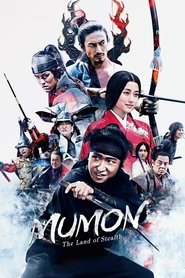
Raised suckling poison arrows among the sparring Iga ninja factions, Mumon is a carefree 16th-century mercenary. When the ninja council makes a power play to defeat the young Nobukatsu Oda struggling to step into his father’s warlord shoes as they expand rule across the country, Mumon jumps into the fray to satisfy his new bride Okuni’s demand that he make good on his promises of wealth. Yet Mumon soon finds what is worth fighting for beyond money or nation.
Struggling against the totalitarian regime of occupied Soviet Latvia, a talented young doctor is stripped of her career, her joy for life, and even her maternal instincts.
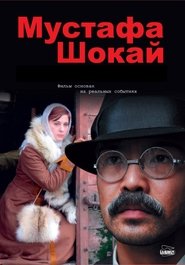
Events are happening in WW2. Jabish is a teacher at primary school. His complaining wife drives him mad about not bribing. Then she makes him to cook a soap for making the money. Also other processes are shown in the course of the war.
Just days after the Civil War ended, President Abraham Lincoln was assassinated at Ford's Theatre. As a fractured nation mourned, a manhunt closed in on his assassin, the twenty-six-year-old actor, John Wilkes Booth. The Assassination of Abraham Lincoln tracks the converging paths of the president and his killer, then tracks and draws connections between their last journeys, in the forms of Lincoln's funeral train route and Booth's desperate efforts to escape.
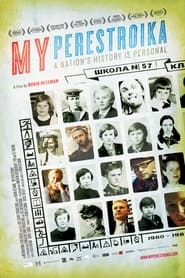
Tells the story of five people from the last generation of Soviet children who were brought up behind the Iron Curtain. Just coming of age when the USSR collapsed, they witnessed the world of their childhood crumble and change beyond recognition. Through the lives of these former schoolmates, this intimate film reveals how they have adjusted to their post-Soviet reality in today's Moscow.
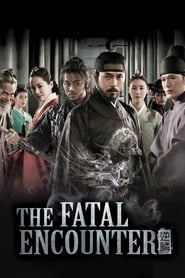
Late 18th-century Joseon dynasty. The King is beleaguered and surrounded by traitors of the ruling elite. They plan to assassinate and replace him with a puppet. But the King has some aces up his sleeve that may help him defeat them all.
"Endless Corridor" is the definitive account of an agonizing human rights tragedy in which hundreds of Azerbaijanis massacred after Armenian Forces stormed the city of Khojaly during the Nagorno-Karabakh War. It happened in 1992, but the full story never been told throughout the world until now.
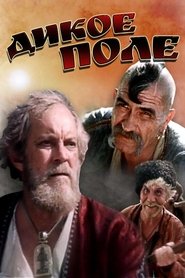
Somehow, three came to these lands to the camp of ataman Sidor. One of them recently escaped from Turkish captivity, where from the centurion dying on his hands, he learned about a chest hidden in these places with the Ryazan treasury. The Cossacks, having conferred, decide to go in search of her, but the Turks are already looking for the treasury, who once hid her here.
The plot revolves around the controversial relationship between maid Stefania Chornenko and blueblood Adelia Anger against the backdrop of the provincial Austro-Hungary in 1900. Both Stefania’s parents and Adelia’s mother died during the fire. Adelia’s father adopted neighbors’ orphan. Girls grew up together to become as close as sisters, though Stefania served as the maid. This attachment develops into love-trap: on one hand full of mutual manipulation and jealousy, but equally based on сare and devotion. The illusion of balance is broken when Adelia marries sculptor Petro. Everything gets even more complicated when Joseph, the old love interest of Stefa, returns to town as the priest and married man. Illusions are destined to evaporate and reality comes into focus.
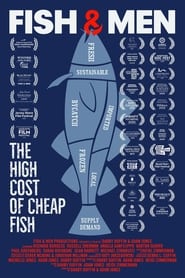
Fish & Men exposes the high cost of cheap fish in the modern seafood economy and the forces threatening local fishing communities and public health by revealing how our choices as consumers drive the global seafood trade. But, a new movement is underway – an opportunity to return sustainability to both fish and fishermen. Thriving on local communities, pioneering fishermen and celebrated chefs are leading a revolutionary new model, a ‘Catch of the Day’ revival based on local, seasonal, sustainable fish and reconnect us with those who risk their lives to harvest the bounties of the sea. Featuring the owners of Mac’s Seafood on Cape Cod and the Gloucester, Massachusetts fishing community.
We have detected that you are using an ad blocker. In order to view this page please disable your ad blocker or whitelist this site from your ad blocker. Thanks!