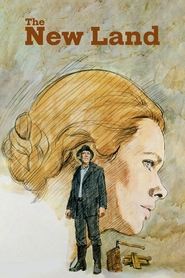
A Swedish immigrant family struggles to adapt to their new life on the American frontier during the second half of the 19th century amidst civil war, native uprising and the lure of gold in California.
The untold story of Katherine G. Johnson, Dorothy Vaughan and Mary Jackson – brilliant African-American women working at NASA and serving as the brains behind one of the greatest operations in history – the launch of astronaut John Glenn into orbit. The visionary trio crossed all gender and race lines to inspire generations to dream big.
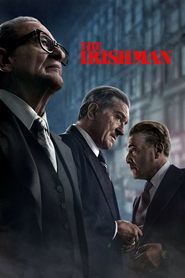
Pennsylvania, 1956. Frank Sheeran, a war veteran of Irish origin who works as a truck driver, accidentally meets mobster Russell Bufalino. Once Frank becomes his trusted man, Bufalino sends him to Chicago with the task of helping Jimmy Hoffa, a powerful union leader related to organized crime, with whom Frank will maintain a close friendship for nearly twenty years.
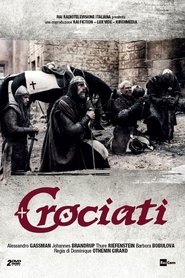
Towards the end of the eleventh century, Pope Urban II announces a crusade against the Saracens, who have occupied the holy city of Jerusalem. Three young friends Richard, Peter and Andrew set off to join the crusading army.
The story of the legendary battle through the eyes of Jedrek - a boy who went through the hell of the gulag and left Russia with the Polish Army as one of thousands of polish orphans. Soon a decisive attack on a monastery located on the hills of Monte Cassino is to take place at the front - this spectacular battle will decide the lives of many soldiers and the fate of the Allied offensive in Italy, and will change Jedrek's life forever.
The story of Jean Moulin, a French civil servant and resistant who succeeded in unifying the main networks of the French Resistance in World War II, and who served as the first President of the National Council of the Resistance during the German occupation of France.
A fascinating exploration of the literary — The Tragedy of Othello, the Moor of Venice, by English playwright William Shakespeare (1604) — and lyrical — Othello, by Italian opera composer Giuseppe Verdi (1887) — myth of Othello, the desperately tragic story of a Moorish general in the army of the Venetian Republic whose absurd jealousy poisons his love for his wife Desdemona.
Under Genghis Khan, the Mongolian army pushes west to destroy the Jin Dynasty, setting its sights on the Song Dynasty next. Amid internal conflicts among martial arts schools, Guo Jing unites the Central Plains' warriors to defend Xiangyang, embodying courage and loyalty in the fight for the nation.
After the failure of the Kossuth's revolution of 1848, people suspected of supporting the revolution are sent to prison camps. Years later, partisans led by outlaw Sándor Rózsa still run rampant. Although the authorities do not know the identities of the partisans, they round up suspects and try to root them out by any means necessary.
The film follows the life of Napoleon from his early life in Corsica to his death at Saint Helena. The film is notable for its use of location shooting for numerous scenes, especially at the French estates of Malmaison and Fontainebleau, the Palace of Versailles, and sites of Napoleonic battles including Austerlitz and Waterloo.
Straw Dolls tells the story of a how a father and daughter sacrifice their own wellbeing for a mother and her young daughter. Based on a series of true events, the film takes place during the start of the Armenian Genocide.
Against the frontier of colonial America, the untold origin story of a 22-year-old George Washington unfolds—long before the Revolution, long before the Constitution—when a single mistake nearly cost him everything. After triggering the start of the French and Indian War, Washington must reckon with personal failure, devastating loss, and the weight of responsibility. What emerges from the ashes isn’t just a military leader—but a man forged by humility, courage, and conviction.
In 1945, as Stalin sets his hands over Poland, famous painter Wladislaw Strzeminski refuses to compromise on his art with the doctrines of social realism. Persecuted, expelled from his chair at the University, he's eventually erased from the museums' walls. With the help of some of his students, he starts fighting against the Party and becomes the symbol of an artistic resistance against intellectual tyranny.
Told in flashback as Mieszko lies feverish in his bed just before the Battle of Cedynia, Gniazdo recounts how the revered leader extended Poland's borders, formed an alliance with Emperor Otto I, and ultimately strengthened his country's autonomy by achieving victory during that crucial battle in the year 972.
On 2 January 1899, starting from the French Sudan, a French column under the command of the captains Voulet and Chanoine is sent against the black Sultan Rabah in what is now the Cameroon. Those captains and their African mercenary troops destroy and kill everything they find on their path. The French authorities try to stop them sending orders and a second troop but the captains kill the emissaries who reach them. Sarraounia, queen of the Aznas, have heard about the exactions. Clever in war tactics and in witchcraft, she decides to resist and stop those mad men.
In 1988, Chilean military dictator Augusto Pinochet, due to international pressure, is forced to call a plebiscite on his presidency. The country will vote ‘Yes’ or ‘No’ to Pinochet extending his rule for another eight years. Opposition leaders for the ‘No’ vote persuade a brash young advertising executive, René Saavedra, to spearhead their campaign. Against all odds, with scant resources and while under scrutiny by the despot’s minions, Saavedra and his team devise an audacious plan to win the election and set Chile free.
In 1814, a nobleman from the Kandian Kingdom of Sri Lanka helped the British army to revolt against the king of Southern India, but was driven to a traitor. His wives have to choose between committing suicide or marrying outcasts. Instead of suicide, young and beautiful Tikiri chooses to marry an untouchable, named Vijaya.
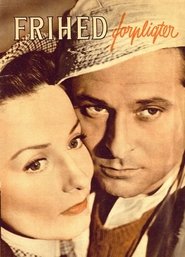
Danish social democratic propaganda film. During the Occupation, the young freedom fighter Søren had a good working relationship with a comrade in the resistance movement, despite the fact that Søren was a social democrat and his comrade a communist. After the liberation in May 1945, the differences that had been less important during the war begin to stand in Søren's way. Both his friendship with his comrade and his relationship with the wealthy Inger fall apart in the summer of liberation. But through his work in the Social Democratic Party, Søren experiences a renewed enthusiasm and resumes his relationship with Inger. Together, they actively engage in the party's work and both see it as an extension of the struggle for freedom during the occupation. Denmark's entry into NATO is particularly important.
We have detected that you are using an ad blocker. In order to view this page please disable your ad blocker or whitelist this site from your ad blocker. Thanks!