Unable to serve in World War II because of a heart condition, a barber moves his family adjacent to a Wisconsin army base and prisoner-of-war camp to provide his services. But even in rural America -- far from the frontline -- the war finds victims.
Belgrade, 1999. Producer Sergei and his film crew are in a disastrous situation - the film they're making is under threat - there's no money, the crew are dissatisfied - and NATO bombing is just around the corner. Then a member of the State Security Service (Mileta) comes looking for American co-producer Harvey. Anxious and worried, in the midst of the bombing that's begun, Sergei hides Harvey from what he thinks is awaiting him - arrest. During the night, he thinks up a plan. He announces the start of filming on a new, patriotic film - in which the main role will be played by Harvey. The plan works - the State supports the film and Mileta, as the State's representative, joins the crew. However, the underlying conflict between Mileta and Sergei explodes during the first screening. Mileta accuses them of being artists, and not being patriots.
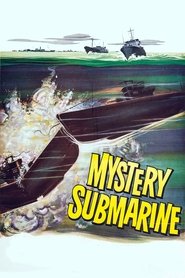
Based on a true story of Polish submarine "Orzel" (The Eagle): September 1939, "Orzel" is coming to Estonian neutral harbor in Tallin. Under pressure from Germany Estonians have intern the ship. Commander Grabinski decides to escape to England through the Baltic Sea, without any maps that has been confiscated and with only small amount of fuel on board.
Thomas Alexandre Davy de la Pailleterie Dumas was born a Caribbean slave in 1762 and beat the odds by rising through the ranks to become a revolutionary French general. The son of a nobleman, Marquis Alexandre Antoine Davy de la Pailleterie, and an African slave, Marie-Cessette Dumas, he became the first and highest-ranking Black leader in the French military and served under Napoleon Bonaparte. But despite his many exploits, which earned him the nickname of “Black Devil,” his role in the French Revolution was underplayed and he was even denied a full pension and legion of honor by Bonaparte.
Abar Tora Manush Ho is a 1973 Bangladeshi film starring Maruf Ahmed, Bobita, Farooque and Raisul Islam Asad. Khan Ataur Rahman earned both Best Film and Best Director Award at Bangladesh National Film Awards.
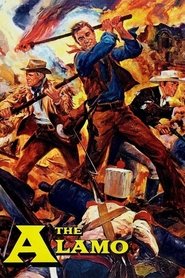
The legendary true story of a small band of soldiers who sacrificed their lives in hopeless combat against a massive army in order to prevent a tyrant from smashing the new Republic of Texas.
Steve Tuttle, the titular lazybones, takes on the responsibility of raising a fatherless girl, causing a scandal in his small town. Many years later, having returned from World War I, he discovers that he loves the grown-up girl.
The Nomad is a historical epic set in 18th-century Kazakhstan. The film is a fictionalised account of the youth and coming-of-age of Ablai Khan, as he grows and fights to defend the fortress at Hazrat-e Turkestan from Dzungar invaders.
The harrowing true story of two elite US Navy fighter pilots during the Korean War. Their heroic sacrifices would ultimately make them the Navy's most celebrated wingmen.
During the Anti-Japanese War, Yang Haotian, a soldier of the New Fourth Army, is leading his fallen comrades back to his unit when he meets Qin Yu, a Nationalist intelligence officer who is being pursued by the Japanese at Lost Cloud Ridge.
In the hot summer, a young man, Tomáš Sinek, is about to go "strawberry picking" in England. It seems that the family - father, mother and grandmother have no other worries than to send their offspring on the trip, although - as it seems - not everyone agrees with his decision. However, the situation is not so simple. It is Czechoslovakia in 1968. Tomáš spends a night with his friends and his girlfriend Tanya before their departure. In the morning, however, his father's suspicious phone calls with his colleague Vrana begin, full of secret information, his mother is making supplies and his grandmother is crying. Tomáš rushes to the station, but Prague is deserted and no trains are running. He doesn't consider the situation to be serious, so he is not too worried about the delay for a day. But on that August morning, the fate of thousands of people changed radically. It was August 21, 1968, and in a few moments the life of Tomáš, his family and his friends would
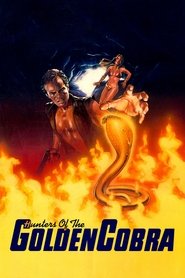
An American soldier and a British intelligence agent try to track down an ancient relic called the Golden Cobra, rumored to have supernatural powers. An early Raiders rip-off directed Antonio Margheriti.
We have detected that you are using an ad blocker. In order to view this page please disable your ad blocker or whitelist this site from your ad blocker. Thanks!