Three boys are growing up in Israel and the Palestinian territories, right next to each other, in completely different worlds. We follow them over the course of a year, through adolescence. We watch as they experience life in promiscuous Tel Aviv, in the religious ideology of a Jewish settlement and in the occupied city of Hebron, where Israeli soldiers are in control. One year of trials and tribulations of three sixteen year old boys. They try to fulfill their teenage dreams in an environment of violence and sometimes war.
This cinematic travelogue consists of three parts. In the first part, texts and small maps are our guides through Madrid in 1936. We see pictures of daily life against the background of the fascist shillings. A sad portrait of destroyed houses, the search for survivors under the rubble, and children's corpses in small wooden coffins. Central to the second part is the defence of liberty. Images from the front alternate with fragments of the besieged city. The last part deals with the aid given to and still needed by the town; an appeal is made to give money for medicines. This film breathes an unfaltering belief in a favourable close: unconditional victory. At the time, the film was a great success and yielded a lot of money for medical aid to Spain.
The image of the Mongolian countryside, the struggle for freedom, and the changes in the minds of the people of the new social relations are reflected in the form of an epic. The main characters of the film are the well-known characters such as Erdene, his wife Dolgor, the rich Itgum, and Timur, a good glass man called "silicon", and the complex events of their lives.
appears.
Minoo who is married to Moosa recently, is moving to the new house. But Moosa receive a letter in which he being told to get back to the Minoo Island (a border island between Iran and Iraq), to dispatch a watch tower there from the period of war. Moosa who has a lot of memories of that place refuses to go there but his wife Minoo is insisting. Finally she manages to convince him and both go there.
In the beginning of WW II a Swedish ship in a northern French port is exposed to German air raids. The captain take a chance to leave the port without permission. A stranded woman seize the chance to get home to Sweden.
Documentary using animated maps, recreations and period footage, on conflicts around a French stronghold which the Germans briefly captured during the battle of Verdun in WWI, between February and October of 1916.
The hero is a young soldier who is in love with two girls simultaneously. While on the battlefield, the soldier learns that one of his sweethearts has committed suicide. Only temporarily taken aback, he begins to dream of the blissful domesticity which he will enjoy with the other girl upon his return.
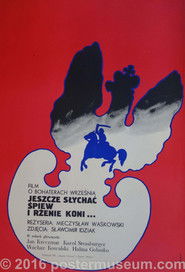
A retired army colonel learns that years ago, during the 1939 September Campaign he was ordered to give medals to the ten bravest soldiers in his company. He asks his son to help him out, so he sets out on a journey to find surviving soldiers and judge if they are worthy of the honor.
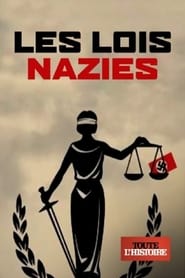
Sobering look at how Hitler and the Nazi party manipulated laws to further their hate-filled agenda. People who were considered physically or racially inferior or disloyal to the state were deprived of their rights and often their lives under these Nazi laws. When Germany was ultimately defeated, Nazi leaders were charged with crimes against humanity in the Nuremberg Trials, in an attempt by the world community to restore the rule of law.
The story focuses on a veteran (the General) who served the military during WWII, Vietnam and the Korean War. He has quite a few alarming conceptions about warfare ("politics are the extension of war", “Civilians are as much the enemy as men in uniform”…) When he returns to his estate in Antwerp, he continues to live under the impression of being in command of his troops and hikes into the nearby woods fully armoured.
Russian filmmaker Mark Donskoi, of "The Gorky Trilogy" fame, was responsible for the postwar Soviet drama The Taras Family (originally Nepokorenniye, and also released as Unvanquished and Unconquered). A semi-sequel to Donskoi's Raduga (1944), the story is set in Nazi-occupied Kiev. The drama focusses on the travails of a typical Soviet family and on the efforts by the Germans to force the reopening of a local munitions factory. The film is at its most grimly effective in a long sequence wherein the Nazis conduct a search for Jewish escapees, culminating in a horribly graphic re-creation of the slaughter of the Jews at Babi Yar. While Donskoi was critically lambasted for his cinematic "sloppyiness" during this sequence (hand-held camera, rapid cuts etc.), it can now be seen that he was attempting a realistic, documentarylike interpretation of this infamous Nazi atrocity.
Young Jackie Kernwood, the daughter of the colonel commanding an army post, is bored with the routines of post life, and to break the monotony she organizes a girls' brigade, of which her father disapproves. When the colonel forces her to disband the group, she makes up her mind to run away and become a nurse in the Red Cross. Before she can do that, however, she stumbles across evidence of a spy ring headed by an officer on the post that is plotting to blow up a troop train--and it looks like the chief spy is her boyfriend, Lt. Adair.
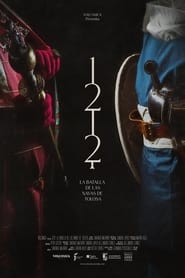
On 16 July 1212, a Crusader army made up of Castilians, Aragonese and Navarrese (but also French, English and Germans) confronted the army of the Almohad Caliph an-Nasir at the foot of the Sierra Morena mountain range. The Battle of Las Navas de Tolosa, as the battle is known, is considered the most important battle of the Middle Ages on the Iberian Peninsula and is a key event in the history of Spain. More than 800 years later, a group of archaeologists and specialists have begun an archaeological study of the battlefield. Is everything that has been said about the battle true? What secrets does the terrain hide? And, above all, what can we learn today about events that took place hundreds of years ago and that pitted tens of thousands of people against each other in the south of our country?
We have detected that you are using an ad blocker. In order to view this page please disable your ad blocker or whitelist this site from your ad blocker. Thanks!