A diverse group of friends gather to celebrate a witless woman's birthday in this comedy drama set in France during World War II. The guests include an uncle who is a Nazi collaborator, a blind war veteran, a simpering physician, an arrogant educator, a patriotic girl, and the husband of the guest of honor. When some German soldiers are killed outside the house, the group is told by the Gestapo that they must choose among themselves two who will be shot if the killer is not caught. If two victims are not chosen, all seven at the party will be captured. Things sound pretty grim, but the black comedy begins when all seven try to save themselves by any means possible.
From the creators of Kenny Crackerman and its sequels comes Crackerman—an epic reimagining of Kenny’s original tale. When Kenny’s supernatural powers spiral out of control, his brother Alex and Grandpa Crackerman embark on a desperate quest to save him from himself.
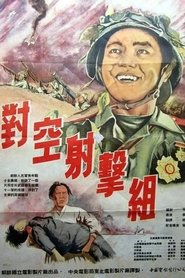
The main character of the film, Man-sik Kim, is a fighter of the Korean People's Army. Through his bravery and resourcefulness in battle, he crushed the enemy's air superiority and dealt a crushing blow to the enemy.
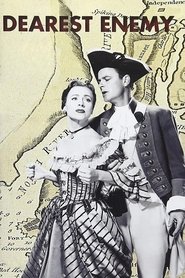
This live TV adaptation of the Broadway musical "Dearest Enemy" from 1925 is based on an American Revolutionary War incident in September 1776 when Mary Lindley Murray, under orders from General George Washington, detained General William Howe and his British troops by serving them cake, wine and conversation in her Kips Bay, Manhattan home long enough for some 4,000 American soldiers, fleeing their loss in the Battle of Brooklyn, to reassemble in Washington Heights and join reinforcements to make a successful counterattack.
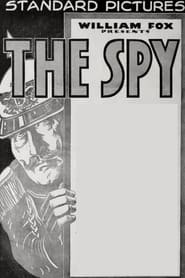
U.S. Secret Service agent Truxton Darnley attires himself as a sailor and boards a schooner owned by arms smuggler Gus Olsen, who is in the employ of German spy Von Linterman to smuggle arms to German raiders in the South Seas. Truxton learns Gus’s plan to blow up the National Munitions Plant in San Francisco, just before his identity is discovery and he is thrown overboard. Washed ashore on the island of Moana, Truxton meets native girl Lurline. Promising to return to her, Truxton boards a steamer bound for San Francisco to foil the plot and soon afterwards Lurline’s father sells her into marriage with Gus. Escaping to Truxton's steamer, Lurline sails to San Francisco where Gus abducts her forcing her to dance in his Barbary Coast saloon. Truxton raids the bar, kills Gus is killed and the lovers are reunited.
Viet Flakes was composed from an obsessive collection of Vietnam atrocity images, compiled over five years, from foreign magazines and newspapers. Schneemann uses the 8mm camera to “travel” within the photographs, producing a volatile animation.
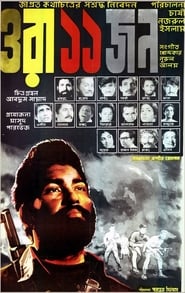
The drama is based on the Bangladesh Liberation War. Director Islam and lead actor Khasru were both members of Mukti Bahini. The movie is about the liberation war of Bangladesh in 1971. This historical movie talks about the sacrifices people had to make for the freedom of their country.
An American is sent to Germany to unearth the identities of German agents operating in the U. S. He infiltrates the German secret service in an attempt to abscond with a list of undercover German operatives.
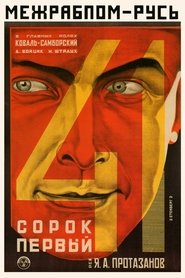
A young woman sharpshooter fighting with the Reds in Turkestan misses her forty-first victim, a handsome White lieutenant, and ends up escorting him, by boat, into captivity across the Aral Sea. A storm strands the two on an island.
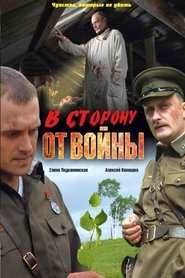
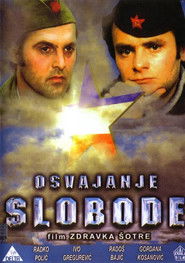
WW2 has ended, but that doesn't mean the end of problems for an ex-Partisan who now must take care of reconstruction, as well as the building of a new society in a small Serbian town.
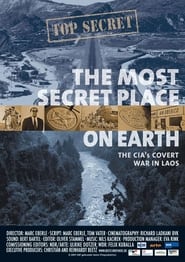
After 30 years of conspiracy theories and myth making, this film uncovers the story of the CIA's most extensive clandestine operation in the history of modern warfare: The Secret War in Laos, which was conducted alongside the Vietnam War from 1964 -1973. While the world's attention was caught by the conflict in Vietnam, the CIA built the busiest military airport in the world in neighboring and neutral Laos and recruited humanitarian aid personnel, Special Forces agents and civilian pilots to undertake what would become the most effective operation of counterinsurgency warfare. As the conflict in Vietnam grew, the objective in Laos changed from a cost effective low-key involvement to save the country from becoming communist into an all-out air war to cut the Ho Chi Minh Trail and bomb Laos back into the Stone Age that it had never really left in the first place. Conventional bombs equivalent to the destructive power of 20 Hiroshima-type weapons fell on Laos each year - 2 million tons
We have detected that you are using an ad blocker. In order to view this page please disable your ad blocker or whitelist this site from your ad blocker. Thanks!