A documentary propaganda film produced by the U.S. Army Signal Corps about the Aleutian Islands Campaign during World War II. The film opens with a map showing the strategic importance of the island, and the thrust of the 1942 Japanese offensive into Midway and Dutch Harbor. Nominated for the Academy Award for Best Documentary Feature.
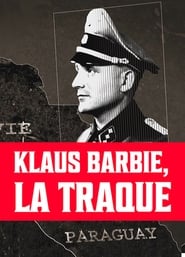
Historic archives shed new light on the secret history of Klaus Barbie, head of the Gestapo in Lyon in 1943-44, with particular attention being given to the scandalous protections that the German and American secret services provided him with.
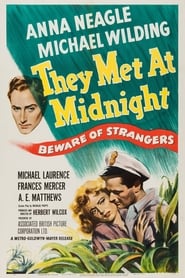
A newly married WREN, presumed drowned when her ship is torpedoed, spends three years on a tropical island before returning to England to find her husband remarried with a baby son.
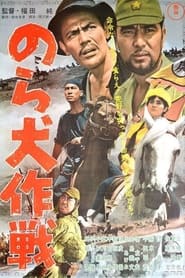
Director John Barnwell's 1959 WWII drama stars Keith Andes as an American soldier in the Philippines who trains a village of headhunters to fight the Japanese. Also in the cast are Susan Cabot and Paraluman.
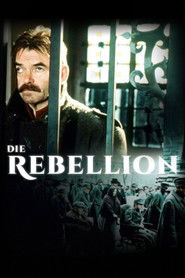
The disabled ex-soldier Andreas Pum lost a leg for emperor and father land. After leaving the army he receives a license and a drehorgel. One day he gets into a controversy with a welldressed gentleman, disturbs the public order, and hits a policeman. Andreas Pum goes to jail, loses his license and becomes toilet guard in the Cafe Halali after his release. Only at the moment of death he recognizes that he was always too decent and too obedient.
The fainthearted cigar trader Ducker keeps himself quiet during World War II. That changes when parachutist Dorbeck lands in his backyard. It turns out the parachutist bears a remarkable resemblance to Ducker. Ducker follows Dorbeck blindly, becomes involved in the Dutch resistance and soon starts killing people. When he escapes through German lines to the freed South Netherlands, no one has ever heard of Dorbeck.
A Soviet documentary chronicling the final assault on Nazi Germany’s capital. More than forty frontline cameramen from the 1st Belorussian and 1st Ukrainian Fronts captured the battle and its aftermath, supplemented with seized German footage. The film records the destruction of Berlin and the symbolic collapse of Hitler’s regime, standing as both a historical chronicle and a work of Soviet wartime cinema.
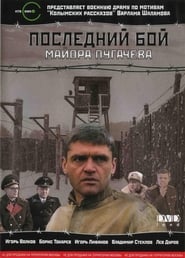
During WWII, Major Ivan Vasilyevich Pugachev fights at the front, but after being wounded he is taken prisoner. During the offensive of the Soviet troops, the Germans decide to eliminate the prisoners of war. Before the execution, General Vlasov arrives in a German concentration camp, who agitates to join the ROA. Pugachev and his comrades decide to escape.
We've all heard of the atomic bomb, but in the late 1950s, an idea was conceived of a bomb which would maximize damage to people, but minimize damage to buildings and vital infrastructure: perfect for an occupying army. This is the story of a man and his bomb: a melding of world events and scientific discovery inspire the neutron bomb, one of the most hated nuclear weapons ever invented.
This short documentary from the Canada Carries On series celebrates the contribution of Canada’s railroads to the war effort. The film includes a sequence from Buster Keaton's 1926 silent comedy The General, as well as a re-enactment of Lord Strathcona driving the final spike into the Canadian Pacific Railway Line.
Dance of Deception is a tense political thriller set during the German occupation of Denmark in World War II. Journalist Marylin Rutherford conducts an interview with Frits Clausen, the controversial leader of the Danish pro-Nazi political party. What begins as a formal conversation escalates into a dangerous psychological confrontation, as Marylin hides a motive, and a searing personal loss. The line between truth and performance blurs—until everything shatters in a haunting final twist.
From the age of 13, Temujin's son will inherit his father's hearth. But his teammate Jamuha was the first to stop him on his way to become the king of Mongolia, and even King Tooril of Hareid, who became his father instead of his father, stood against him.
Based on diaries, records and eyewitness accounts, this is the story of the two Battles of the Somme from the perspective of British and German soldiers. It shows how the major lessons learned by the British Army leadership after the disastrous first attacks of July 1916 were turned into victory at the second attempt in September 1916, arguably the turning point for the First World War.
We have detected that you are using an ad blocker. In order to view this page please disable your ad blocker or whitelist this site from your ad blocker. Thanks!