Powerful myths and misconceptions have shaped our understanding of the moment which changed the course of WW2 - the evacuation at Dunkirk in 1940. But what really happened at Dunkirk and in the crisis before the days of the evacuation? This documentary takes a European look at the crisis and asks new questions from a French and German perspective as well as from a British point of view. Featuring interviews with veterans and historians from all three key protagonists, providing revealing insights into the events of May and June 1940.
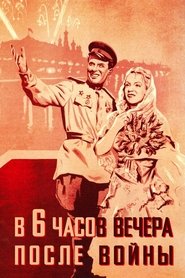
Designed as a successor to "They Met In Moscow", with the same director, star and composer, "Six P. M." (1946 American release title) has two artillery officers meeting an attractive girl in Moscow between battles. One falls in love with her and they vow to meet in Moscow on a bridge at Six P.M. when the war ends. The war puts them on diverse trails, but the pledge is fulfilled against a setting of Moscow's famous fireworks displays.
Set in rural Cornwall, the romantic drama will chart a brief encounter between a lonely farmer’s wife and a Black American GI that leads to first love in middle life and an impossible choice.
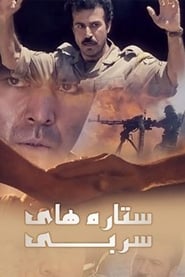
In world Paralympic championships, Nariman Shokri - the Iranian athlete - encounters Kamel Sa'Doun from Iraq. When Nariman sees him, he goes back in his memories and remembers the hard and ...
“As the German blitz raids reach their 39th day further air raids are to be expected at anytime…” At BBC broadcasting House, Bruce Belfrage and the rest of the staff are preparing the nightly news for millions of anxious listeners, but when the building suffers a direct hit they must pull together to face a terrible choice. Inspired by a true story.
What had initially started out as a Jewish revolt against the Roman occupation, quickly turned into a fierce civil war. The combination of religious messianic zeal and the friction between social classes proved disastrous and resulted in the destruction of Jerusalem and the Holy Temple.
Reveals an alternate history of the post-war world. This is a version of history where, in contrast to what we are all told, fascist ideology prevailed. The story of Klaus Barbie, Nazi torturer, American spy, tool of repressive right-wing regimes, is symbolic of the real relationship that the "Western" governments had with fascism and makes us see the world as it is today - and the politicians that inhabit it - in a different way.
Amid the ruins of northern Gaza, Ibrahim clings to the only companion he has left: Farfour, a stray cat he adopted during the war. Farfour has become more than just a pet for Ibrahim. He has turned into his shadow, his confidant, his last connection to humanity. Together, Ibrahim and Farfour navigate a collapsing world, enduring a relentless siege while living in an unsafe building, with no water and electricity. As the war tightens its grip, Ibrahim must flee.
War rages in an undefined country. We get to follow three soldiers, who team up driving an armored tank. However, the vehicle keeps breaking down, and ammo is running short, the fighters' morale gets lower and lower and the situation degenerates.
The events of the film are based on the real facts of the Pacific War, when in June 1944 the American troops began landing on the Saipan island. On July 7, an order comes that everyone must die in order not to be captured by the enemy.
Documentary short film detailing the history of the American Women's Army Corps, the WACS. Preserved by the Academy Film Archive, Academy War Film Collection, in 2009.
The year is 1944. The young scout Marianne remains alone behind enemy lines. Having no experience, without communication and support, she starts an important task on her own.
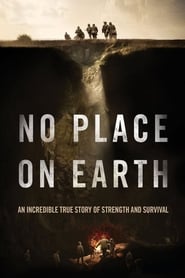
This extraordinary testament to survival from Emmy-winning producer/director Janet Tobias brings to light a story that remained untold for decades: that of thirty-eight Ukrainian Jews who survived World War II by living in caves for eighteen months. (TIFF)
In January 2025, experimental jazz duo Myshko Birchenko and Yevhen Puhachov, members of Hyphen Dash, travelled to Kramatorsk without any pre-made drafts or demo recordings to use music as a vessel to capture the emotions present in a place on the edge of a battle for survival and explore the therapeutic nature of music and improvisation in the brutal reality of war. They packed all the equipment into a car, drove 700 kilometres from Kyiv to the frontline city Kramatorsk, and turned one of many basements which serve as shelters into a makeshift recording studio. As a result, they recorded over 300 minutes of music, which were eventually distilled into a 90-minute album.
1941, Ukraine. A group of German soldiers occupy a small town populated exclusively by women and children of German descent, way behind enemy lines. There's tension from the beginning, that always threatens to erupt in violence from both sides.
We have detected that you are using an ad blocker. In order to view this page please disable your ad blocker or whitelist this site from your ad blocker. Thanks!