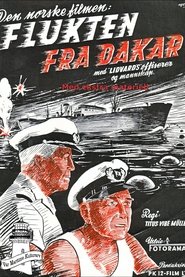
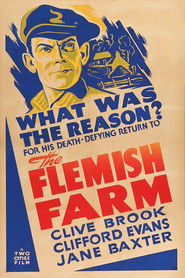
MS Lidvard was shipping corn from Vietnam, arriving in Dakar, Senegal May 30th 1940. The ship was immediately held back by the government, together with eight other norwegian ships. After a year, July 27th 1941, the ship fled from Dakar, to the British in Freetown, Sierra Leone.
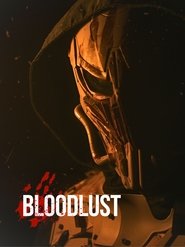
Bloodlust follows the story of Chad Ross, a boy who was born with a rare condition that causes his blood cells to infinitely regenerate themselves, as the government notices his potential. Kidnapped by a deranged drill sergeant, Ross is trained to become an American super soldier and a cold-blooded and lonely killing machine. But when a formidable terrorist group commanded by their psychotic leader Reaper takes a nuclear weapons bunker hostage, he is forced to work with a squad who help him realize what it means to find your purpose.
Hirayama Koichi and his wife Michiko eloped from Osaka to Okinawa, where they lived happily with their five children. When war erupts, their eldest son is drafted into the Imperial army. As fighting spreads, the family takes refuge far from the city, but soon, child after child is drafted to serve in various branches of the military and in organizations supporting the war cause. Koichi himself is faced with a moral dilemma when he is ordered to kill a wounded American soldier.
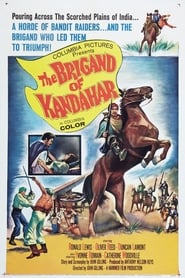
1880. British India. Robert Case, a half-caste lieutenant, is unjustly discharged from the British Army. He joins the rebel Bengali tribesmen offensive against the colonial enemy. They capture a foreign journalist and Case recounts his story of false accusation on trumped-up charges, instigated by the bigotry and racism of his commanding officers. Following a successful attack by the British against the rebels Case is brutally shot by Colonel Drewe, his accuser. The journalist returns home determined to report the true story of The Brigand of Kandahar.
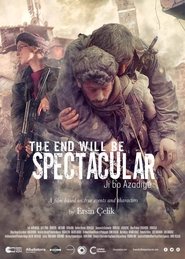
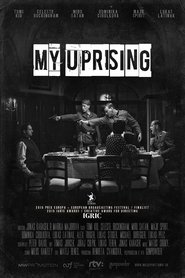
Zilan, a young woman, returns to her home town looking for traces of her dead brother, killed by ISIS. But her town is not what it used to be: social and political tensions have escalated into a state of war. The people have risen up to demand their political autonomy and the police and army repress them with brutal force. But the city’s resistance will go on for more than 100 days and Zilan will not remain a passive witness. Based on the diaries of those who died fighting and the testimony of survivors, who are the protagonists of the film, Çelik's first feature explores concepts such as hope, friendship, sacrifice and loss in the struggle for freedom of a group of young people.
Canada: A People's History - Episode 14: 1940 to 1946 CE. Canada comes of age in the anguish of World War II, with soldiers on the beaches at Dieppe and women in the industrial work force back home. The country's military role, and the domestic, social and political consequences of the war are traced through poignant stories of Canadians on both sides of the Atlantic. The horrific global conflict steals the innocence of a generation... but brings hope for a new future.
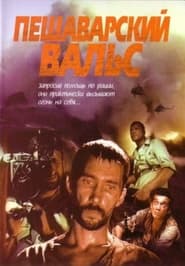
During the Russian war with Afghanistan in the 1980s, journalist Charlie Palmer and medic Victor Davis arrive at a P.O.W. camp near the Afghanistan/Pakistan border in order to document the sub-human conditions which the prisoners are forced to endure. During their visit, the prisoners seize control of the camp and begin to enact a series of terrible and bloody punishments on their captors. Held as hostages, Palmer and Davis are forced to witness acts of barbarity unlike any they have ever seen before.
A visit to the famed aircraft carrier USS Midway and interviews with men who served aboard it bring the exciting story of the vessel to life in this dramatic documentary. In service for 47 years, the Midway saw heavy action during the Vietnam War, and its hair-raising missions to rescue downed pilots were legendary. After Vietnam, the Midway, now berthed in San Diego, participated in numerous operations, including the Gulf War.
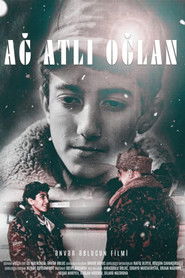
At the end of the Garabagh war, a young Azeri man, who has been witness to the martyrdom of many people and the dispatch of his friends and relatives to the war front, mounts a white horse and without informing his family sets out for the front, He joins the relief work group in spite of the objections of the commander of the forces, until...
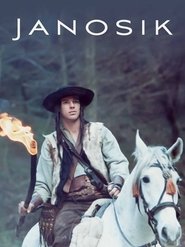
The story of Janosik, a legendary "Central European Robin Hood", based on real XVIII century documents and a romantic legend. Young Janosik, burnt out by war experiences and disappointment in love, joins a team of brigands. Soon after he becomes the troop's leader and is recognized as a brave and honorable commander, he never kills anyone he robs. Along with the fame he starts enjoying popularity among women. But Janosik's success raises jealousy in one of the troop's members, greedy and brutal Huncaga.
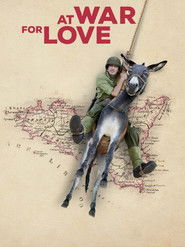
It's 1943 and World War II is raging in Europe. In New York, Arturo and Flora the daughter of a restaurant owner are in love, but she is promised in marriage to the son of a Mafia boss. There is a way around this, but to be able to marry Flora, Arturo needs to get permission from her father, who lives in a village in Sicily. Arturo doesn't have any money, so the only way he can get to Sicily is to enlist in the U.S. Army, which is preparing for a landing on the island.
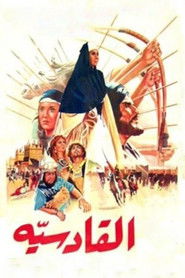
A historical epic about the battle of Qadiseya, which was helmed by the Arabian knight Saad Ibn Abi Waqas, and which enabled Muslims from conquering Persia in 636 A.D.
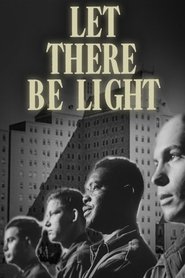
The final entry in a trilogy of films produced for the U.S. government by John Huston. Some returning combat veterans suffer scars that are more psychological than physical. This film follows patients and staff during their treatment. It deals with what would now be called PTSD, but at the time was categorised as psychoneurosis or shell-shock. Government officials deemed this 1946 film counterproductive to postwar efforts; it was not shown publicly until 1981.
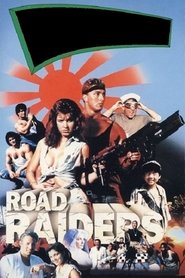
Filled with anachronisms and rip offs from "The 'A' Team" and "The Dirty Dozen" - It's 1942 in Manila and an American saloon owner organizes a misfit group to fight in WWII.
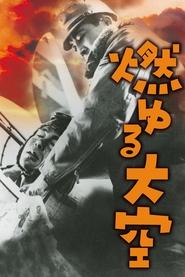
The film was produced during Second Sino-Japanese War, before the Pearl Harbor Attack in 1941. The film mainly concerns the training of newly-recruited pilots and their daily life, then their subsequent fighting experiences in China. Army supported the production, providing all the authentic airplanes, training and actual actions. They even provided the older biplanes disguised as Chinese fighter planes. Obinata plays the trainer-turned-combat-leader, who is passionate and cool at the same time. All his boys love him, of course. The film is not as intense, full of sugar-coated camaraderie, until young pilots are killed in action one by one. Last twenty minutes are fairly grim, as the message of self-sacrifice is heard loud and clear.
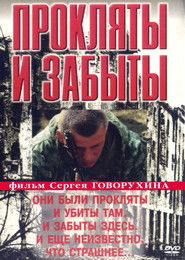
Sergei Govorukhin, son of well known Soviet and Russian film director Stanislav Govorukhin, was a Russian scriptwriter and war correspondent. This is his first and only documentary, dealing with his feelings about the first war he covered - the first Chechen war - as well as his very cynical view of Russian society during this time. These feelings and opinions were shared by many other war correspondents and cameramen at the time. The author used heavily contrasting footage and sound to illustrate his point of the indifference of 90's/early 2000's Russian society towards the conflicts it found itself in after the Second World War.
We have detected that you are using an ad blocker. In order to view this page please disable your ad blocker or whitelist this site from your ad blocker. Thanks!