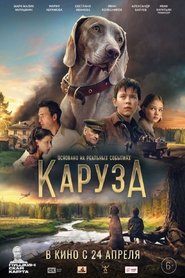
Based on true events, this tale follows the extraordinary bond between a boy and his dog in besieged Leningrad. In 1939, young Mitya finds joy in the companionship of his loyal dog, Karuza. Their idyllic life is shattered when World War II erupts, plunging Leningrad into a brutal siege where starvation looms over its residents. As despair grips the city, Karuza with her keen instincts and unwavering courage ventures into the perilous streets to scavenge for food. Inspired by Karuza’s remarkable bravery, Mitya decides to join her. Together, they are forging a path through despair and hopelessness. However, their efforts take a dangerous turn when they are discovered by German soldiers during one fateful outing.
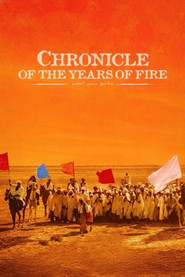
A meticulous chronicle of the evolution of the Algerian national movement from 1939 until the outbreak of the revolution on November 1, 1954, the film unequivocally demonstrates that the "Algerian War" is not an accident of history, but a slow process of suffering and warlike revolts, uninterrupted, from the start of colonization in 1830, until this "Red All Saints' Day" of November 1, 1954. At its center, Ahmed gradually awakens to political awareness against colonization, under the gaze of his son, a symbol of the new Algeria, and that of Miloud, half-mad haranguer, half-prophet, incarnation of Popular memory of the revolt, the liberation of Algeria and its people.
Based on a real story during WWII where Japanese naval soldiers met Italians who were in the submarine Comandante Cappellini used to transport strategic materials to and from Japan.
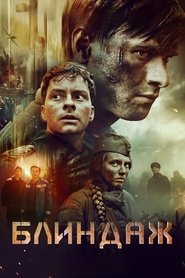
Two friends come to Saur-Mogila - nurse Sergey from Russia and German Paul. They are looking for things from the Second World War and are suddenly transported to 1941, during the battles at Saur-Mogila. The heroes are faced with a choice - to stay and help or return to their own time.
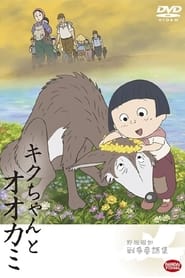
Kiku-chan to Ookami is, like most of the Sensou Douwa specials, based on a short story by Nosaka Akiyuki. It is set in the Japanese puppet state of Manchukuo (the Chinese province of Manchuria) during the closing days of Word War II. Life for the Japanese colonists is tranquil, with none of the hazards and shortages occurring in the Japanese homeland. Then, on August 9, 1945, the Soviet Union, fulfilling its obligations to the Western Allies, declares war and invades. The local Kwantung Army folds up like a house of cards, leaving the Japanese colonists exposed to the invading Russians and Chinese.
Based on the book by Major Alexander de Seversky's about his theories of the practical uses of long range strategic bombing. Using a combination of animation humorously telling about the development of air warfare, the film shows de Seversky illustrating his ideas of how air power could win World War II for the Allies.
Itinerant Kurdish teachers, carrying blackboards on their backs, look for students in the hills and villages of Iran, near the Iraqi border during the Iran-Iraq war. Said falls in with a group of old men looking for their bombed-out village; he offers to guide them, and takes as his wife Halaleh, the clan's lone woman, a widow with a young son. Reeboir attaches himself to a dozen pre-teen boys weighed down by contraband they carry across the border; they're mules, always on the move. Said and Reeboir try to teach as their potential students keep walking. Danger is close; armed soldiers patrol the skies, the roads, and the border. Is there a role for a teacher? Is there hope?
Nazi German officers decide to seize a house where the Pelka family of four live. The four members of the family are Otylia, Czeslaw and two little daughters called Terenia and Jania. From that moment on the life of the Pelka family starts hanging by a thread.
In 1943, Max Fronenberg spent one year digging a secret underground tunnel to escape out of a prison camp in Warsaw, Poland during the Holocaust while saving fifteen other prisoners in the process and forced to leave behind the love of his life, Rena, in the prison.
The sailor Quico Carola, alleged war hero of the Francoist side, emigrated to America and amassed a great fortune. Fifteen years later he returns to Ferrera (Asturias), his homeland, in search of a wife who makes him forget his late girlfriend. There he will see his old friends and Armandina, the widow of a Republican shot during the Spanish civil war.
OBAIDA, a short film by Matthew Cassel, explores a Palestinian child’s experience of Israeli military arrest. Each year, some 700 Palestinian children undergo military detention in a system where ill-treatment is widespread and institutionalized. For these young detainees, few rights are guaranteed, even on paper. After release, the experience of detention continues to shape and mark former child prisoners’ path forward.
Mongolian girl Alima is assigned to accomplish an important mission by CCP. During the mission, her father and fellows are killed by the enemy in a public execution.
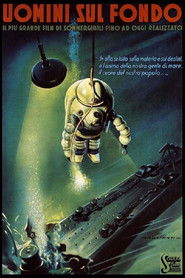
Submarine disaster drama made under the auspices of Mussolini's department of defense. During maneuvers a submarine collides with a surface vessel and drops to the ocean floor. The crew have thirty hours' worth of air to get it back to the surface.
The film is about a group of people who in other times wouldn't have anything in common, some of them innocent bystanders, some moral criminals. But nothing is straightforward and simple. From Russia "the run" continues to Constantinople, to Paris, back to Russia. Some of them have understood that they can't live outside Russia and go back maybe to be happy, maybe not, some go back to face sure death for their crimes, some don't go back and know that are going to miss homeland forever, some are comfortably well off (are they?) in exile. Sentimental without syrup, tragic and comical at the same time.
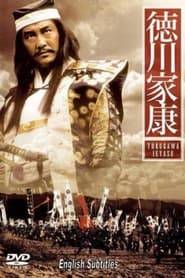
From his early days as Matsudaira Motoyasu through his rise to the most powerful man in Japan as Tokugawa Ieyasu, the first of the Tokugawa Shoguns, this is the story of the man who truly unified Japan under one ruler. Tokugawa Ieyasu is quoted as saying: “People carry burdens through life as they travel a long road. Never rush” “If you think of privation as normal, you’ll be contented. If you know only about winning and losing, harm may fall upon you. Being inferior is batter than being superior.” These writing reflected the beliefs and military strategy of Ieyasu, a man before his time who was destined to take over the entire country in order to ensure the safety of his children.
In Mosul, Nawal takes care of her ailing mother Samia. The mother’s condition gets worse as medicine is no longer available in the city. In the few days she has left, Nawal, her mother and their neighbor share small moments of joy. The ladies sing and dance, they use make-up and make scents, they tell jokes and laugh too hard. In the midst of illness, poverty and war, they manage to transform something dire into something joyful, creating beauty where ugliness strikes.
After his father is murdered by the Nazis in 1938, a young Viennese Jew named Ferry Tobler flees to Prague, where he joins forces with another expatriate and a sympathetic Czech relief worker. Together with other Jewish refugees, the three make their way to Paris, and, after spending time in a French prison camp, eventually escape to Marseille, from where they hope to sail to a safe port.
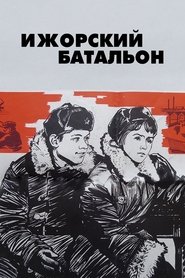
The film is about the fate of the soldiers of the Izhora battalion. Formed from the factory’s workers, the battalion took part in decisive battles against the regular units of the Nazi army and ended its heroic journey on the coast of the Baltic Sea.
The tale of a confrontation with a formidable enemy, poised to seize the throne. It is time for the two kings to set aside their differences and unite in order to protect and preserve their kingdom.
We have detected that you are using an ad blocker. In order to view this page please disable your ad blocker or whitelist this site from your ad blocker. Thanks!