The story is set during the World War II. Seven prisoners manage to escape from the penitentiary and hide in a small village forsaken of God and men. Soon after they respire, they face a new hardship - a German subversive group appears near the village. And as the fate decree, the former 'enemies' of the Motherland turn into its fierce defenders. War mutilates lives of millions of people, but sometimes it is the war that makes even the most thorough scoundrel in the world to remember that he is also a MAN.
Passions erupt between a German hussar (Jean-Marc Barr) serving with King George III's personal cavalry and the only daughter of an English solicitor (Emma Fielding) in this period tearjerker adapted from a short story by Thomas Hardy. Longing to escape their own personal imprisonments -- he, his service to the king, and she, her engagement to a man she doesn't love -- they find solace in each other's arms.
A Union Cavalry outfit is sent behind confederate lines in strength to destroy a rail supply center. Along with them is sent a doctor who causes instant antipathy between him and the commander. The secret plan for the mission is overheard by a southern belle who must be taken along to assure her silence.
First days of September 1939. The government decides to transport the Polish gold stored in the treasury of the National Bank of Poland out of the threatened Warsaw. A convoy is formed under the command of the man for special tasks, Major Bobruk. A string of trucks and city buses travel along crowded roads under relentless attack by aircraft. The convoy makes its way through Lublin to Romanian territory, where the gold will be reloaded onto a train. Prime Minister Calinescu, disregarding the threats of the Nazis, agrees to the transit of the precious bullion through his country. The evacuation of the gold is threatened all the time by a special German sabotage group under the command of Second Lieutenant Rudolf Lang.
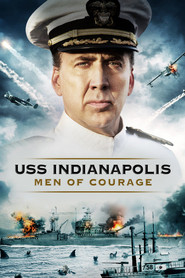
The harrowing true story of the crew of the USS Indianapolis, who were stranded in the Philippine Sea for five days after delivering the atomic weapons that would eventually end WWII. As they awaited rescue, they endured extreme thirst, hunger, and relentless shark attacks.
In 1879, during the Anglo-Zulu War, man-of-the-people Lt. Chard and snooty Lt. Bromhead are in charge of defending the isolated and vastly outnumbered Natal outpost of Rorke's Drift from tribal hordes.
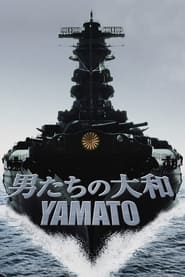
Directed by Junya Sato and based on a book by Jun Henmi, "Yamato" has a framing story set in the present day and uses flashbacks to tell the story of the crew of the World War II Japanese battleship Yamato. The film was never released in the United States, where reviewers who have seen it have compared the military epic to "Titanic" and "Saving Private Ryan."
In 1940, the Royal Air Force fights a desperate battle against the might of the Luftwaffe for control of the skies over Britain, thus preventing an attempted Nazi invasion.
In the rubble of Germany following World War II, a newly released Jewish camp prisoner forms an alliance with a German soldier as they both seek revenge on a Nazi Schutzstaffel unit.
We have detected that you are using an ad blocker. In order to view this page please disable your ad blocker or whitelist this site from your ad blocker. Thanks!