Barbra Streisand's second television special, aired in 1966 just after the singer-songwriter had completed a successful Broadway run of hit show 'Funny Girl'. Streisand sings surrounded by animals in a circus dream sequence and wanders the Philadelphia Museum of Art in a moody eight-minute piece. Filmed in spectacular colour, this companion piece to her first special is one for the ages. The vibrant colours become a metaphor for imagination, inventiveness, fantasy, and sheer brilliance.
The life of Fanny Brice, who rose from the Lower East Side of New York to become one of Broadway's biggest stars under producer Florenz Ziegfield. While she was cheered onstage as a great comedian, offstage she faced a doomed relationship with the man she loved.
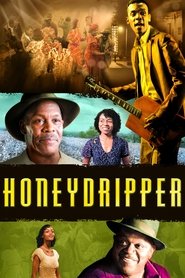
In 1950s Alabama, the owner of the Honeydripper juke joint finds his business dropping off and against his better judgment, hires a young electric guitarist in a last ditch effort to draw crowds during harvest time.
To celebrate her love of music, Sheridan Smith performs songs from her new album as well as other musical numbers, all accompanied by a live orchestra in an hour long TV extravaganza, hosted by Alexander Armstrong.
A graffiti artist and a punk band singer meet amidst a profound social crisis. With revolutionary and idealistic visions for a fairer world, they bond over music and street art, using them as their weapons. Innocent and determined, they demand justice, but their defiance attracts the wrath of three corrupt policemen. After beating him and kidnapping her, they ignite the unimaginable fury of someone who has nothing left to lose.
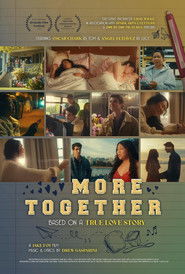
After years of best friendship, teenage Tom and Lucy finally surrender to spending the night together. As their new love blossoms, and Lucy's 'time of the month' is late, the pair are forced to face the music of adulthood head-on.
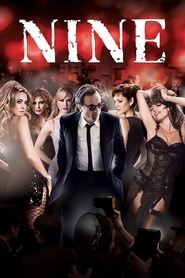
Arrogant, self-centered movie director Guido Contini finds himself struggling to find meaning, purpose, and a script for his latest film endeavor. With only a week left before shooting begins, he desperately searches for answers and inspiration from his wife, his mistress, his muse, and his mother.
A message from Jim Morrison in a dream prompts cable access TV stars Wayne and Garth to put on a rock concert, "Waynestock," with Aerosmith as headliners. But amid the preparations, Wayne frets that a record producer is putting the moves on his girlfriend, Cassandra, while Garth handles the advances of mega-babe Honey Hornée.
A scantily clad woman is rowing a large wooden boat with her eyes closed, when a male figure suddenly appears out of nowhere standing on his hands at the bow. Together they travel down the river under the starry sky surrounded by mystical nature.
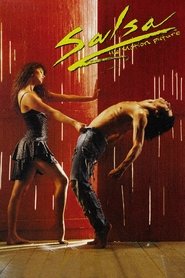
Fatherless barrio Puerto Rican Rico is a menial car mechanic by day, but lives for the nights, when he dances and dates hot dancing girls, cockily convinced the title of Salsa king in fancy nightclub La Luna's upcoming contest is to be his. He encourages his best friend, courteous gentleman Ken, to date his sister Margarita so he gets a free hand with her flirtatious classmate Lola. The reigning salsa queen Luna's interest in Rico as dance-partner threatens his on-off relationship with Vicki. More jealous trouble follows when Ken and Margarita fall in true love.
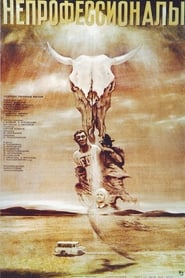
A band of young musicians is looking for fees across the steppe in an ramshackle old bus. During their tour, starving, they kill a cow but they don't know what to do with it. They will also bring happiness in an old people's home in return for food.
It's a straight musical involving a barbershop quartet of alley cats and some dogs summoned from the pound to quiet them to little success. The animation and visual gags are simple and old fashioned, but the aural gags are nicely done and even if there's little coordination between the animation and the music.
In 1818, when Joseph Mohr is assigned to be the new assistant priest in Oberndorf, a small Austrian town near Salzburg, the young man is full of ideas and ideals. His passion to bring the church closer to the common people sets him on a collision course with his new superior, Father Nostler. When Mohr organizes a church choir that includes outcasts from the local tavern and performs in German instead of Latin, Nostler threatens him with disciplinary action. Their relationship further deteriorates when Maria a regular tavern patron, surprisingly joins the performance of the all-male church choir. As Mohr's initial successes start to crumble and his efforts backfire on him, he loses all hope and faces a trial of faith. The night before Christmas, Mohr has to decide if he will accept defeat and leave Oberndorf or embrace the true significance of the Holy Night.
We have detected that you are using an ad blocker. In order to view this page please disable your ad blocker or whitelist this site from your ad blocker. Thanks!