Live Aid was held on 13 July 1985, simultaneously in Wembley Stadium in London, England, and the John F. Kennedy Stadium in Philadelphia, United States. It was one of the largest scale satellite link-ups and television broadcasts of all time: watched live by an estimated global audience of 1.9 billion, across 150 nations. "It's twelve noon in London, seven AM in Philadelphia, and around the world it's time for Live Aid...!"
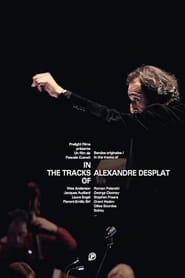
Alexandre Desplat is one of the most famous film music composer of today. Innovative artist with a singular expression, he is the successor of french masters of film music: Georges Delerue, Antoine Duhamel, Maurice Jarre. Writing music for films gather his two passions: music and cinema. Between working sessions, confidences, films and personnal archives, Alexandre Desplat offers, through this documentary, a great record on the creative process and today’s cinema.
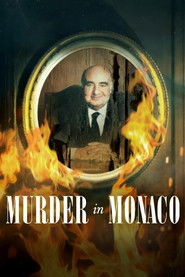
Monaco, 1999. One of the world's richest men dies in his penthouse. This documentary unpacks the mysterious murder of billionaire banker, Edmond Safra.
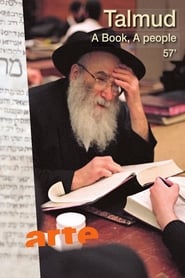
In this authoritative documentary, director Pierre-Henry Salfati traces the history of the Talmud the repository of millennia of Jewish wisdom. In doing so, he posits the question: What comprises this cardinal text of Judaism? Originally passed down orally from master to student, the Talmud is the hidden face of the Torah, or Old Testament. It is a vast body of legal, mythic, and philosophical texts, and a mixture of religious commentary and debate, of history and science, and of anecdote and humor. No other text has had such an influence on Jewish life as it details the principles, ethical codes, and laws that serve as a guide for conduct. In addition to an exhaustive exploration of the Talmud, the film also guides the viewer through the history of Jewish communities, concluding with present-day New York.
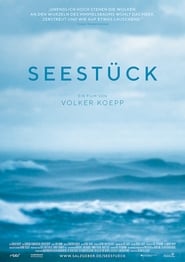
Following Landstück (2016), Volker Koepp's documentary Seestück is about the magical, natural setting of the Baltic Sea, its coasts and its people – including fishermen, seamen, scientists and young people on both the Baltic and Scandinavian shores. Conversations meander from Caspar David Friedrich to Copernicus, Rousseau and Kant, or simply life itself. Present concerns address the sea's threatened ecosystem and political frictions among the neighbouring countries. One universal truth applies for the small Baltic Sea too: The landscape is a window to the world.
What does a day in the life of the most famous painter alive look like? Is it a battleground of colour, a symphony of rebellion, a spectacle of squeegeeing? And what roles do the Sparkasse Bank and mysterious Anselm play in all of that? In his hilarious spoof documentary on the art world, Ulu Braun walks away from his trademark ‘video paintings’ and steps into a full blown AI universe.
In post-industrial Ohio, a Chinese billionaire opens a new factory in the husk of an abandoned General Motors plant, hiring two thousand blue-collar Americans. Early days of hope and optimism give way to setbacks as high-tech China clashes with working-class America.
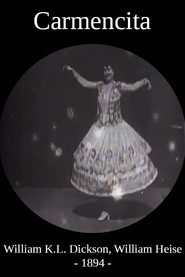
The first woman to appear in front of an Edison motion picture camera and possibly the first woman to appear in a motion picture within the United States. In the film, Carmencita is recorded going through a routine she had been performing at Koster & Bial's in New York since February 1890.
People have been asking questions about God since the dawn of humankind and humanity's disagreements about the nature of God have often led to ethnic and religious warfare, the suppression of women, and the debasing of human dignity. Many religions have created rituals and dogmas that separate one from the other and cling to the belief that only they have the "one truth." But are any of them actually right? Can the true essence of God ever truly be understood or explained? iGod traces how the various belief systems about God have evolved into what exists in the present day, and then delves into the many questions about God that so many people have asked throughout history. Perhaps through this exploration we can finally begin to understand what God really is, what God wants, why we are here and how we can create a better world both for ourselves and future generations.
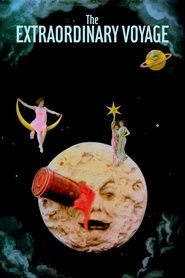
An account of the extraordinary life of film pioneer Georges Méliès (1861-1938) and the amazing story of the copy in color of his masterpiece A Trip to the Moon (1902), unexpectedly found in Spain and restored thanks to the heroic efforts of a group of true cinema lovers.
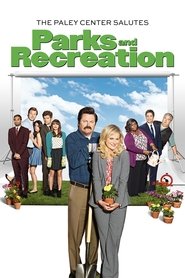
As a lead-in to the highly anticipated special that brings back one of the most admired comedies in TV history, NBC and The Paley Center for Media collaborated on The Paley Center Salutes Parks and Recreation.
Starring Sigmund Freud is a video memento for Sigmund Freud's little-known film career. Based on an essay John Menick published in Frieze in 2011, the video collects the dozens of appearances that the character of Sigmund Freud has made on small and big screens. After the 1950s, when pill vials replaced analytic couches, the father of psychoanalysis found a second career impersonating himself in everything from a John Huston clunker to a Star Trek episode. The video suggests that maybe it is in front of the camera, alongside surgically enhanced starlets and CGI chimeras, that “Herr Doktor” will find his final resting place. This video was produced by the Kadist Foundation and commissioned by dOCUMENTA (13).
A chronicle of the production problems — including bad weather, actors' health, war near the filming locations, and more — which plagued the filming of Apocalypse Now, increasing costs and nearly destroying the life and career of Francis Ford Coppola.
We have detected that you are using an ad blocker. In order to view this page please disable your ad blocker or whitelist this site from your ad blocker. Thanks!