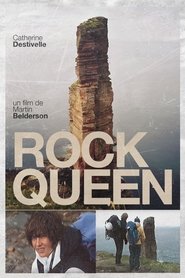
Catherine Destivelle has deservedly become the most famous female climber in the world. She rose to prominence with historic climbs, such as the free ascent of the Nameless Tower in Pakistan, and solo winter ascents of the classic north faces of the Matterhorn and the Eiger, climbs that have never been repeated by any woman. She also made history in sport climbing by winning the world championship title. In 1997, this time in Scotland, on the iconic Old Man of Hoy route, opened by Bonington, Patey & Baillie, Martin Belderson crowned Destivelle Queen of the Rock. She was four months pregnant when she made this 137-meter ascent, which was not difficult but on tricky rock.
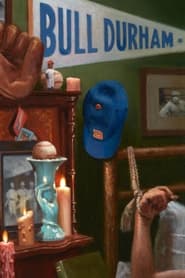
A film crew trails Philbert Powell through his morning, from the supermarket to his job at a video store. Along the way, he crosses paths with several individuals all named “Slater.” His interactions with them raise the central question: who, among those Slaters, is his friend? The narrative unfolds across a single morning, blending encounters and identity as Philbert’s journey reveals the shifting dynamics of connection.
It is the largest movement the world has ever seen, it may also be the most important - in terms of what's at stake. Yet it's not east being green. Environmentalists have been reviled as much as revered, for being killjoys and Cassandras. Every battle begins as a lost cause and even the victories have to be fought for again and again. Still, environmentalism is one of the great social innovations of the twentieth century, and one of the keys to the twenty-first. It has arisen at a key juncture in history, when humans have come to rival nature as a power determining the fate of the earth.
France is at the heart of Madonna's life. She is inspired by French culture and its values and has surrounded herself with French artists for many years. To celebrate the 40th anniversary of the Queen of Pop's career, this film revisits the close and unique bond between Madonna and France and features testimonials from close collaborators and French friends who have helped create her unique artistic universe: Maripol, Jean Paul Gaultier, Julien d'Ys, Nicolas Huchard, and Marion Motin. Today's artists such as Florence Foresti, Leïla Slimani, Victor Weinsanto and HollySiz talk about the influence of this emancipating figure, which extends far beyond music.
A documentary, which takes you on a journey of Bowie's revolutionary career, struggle with his personal life and his achievements and successes. Features interviews with Bowie, Iman his wife, his musical contemporaries including Iggy Pop, Moby and Trent Reznor. Exclusive footage of live performances of the showman's best and music and film to showcase 30 years of his career. Highlights Bowie's interests, passions and involvement with the arts.
This is a story of a seemingly quiet and unobtrusive man, author of a colossal and partly unfinished literary work. We will try to trace back to the origins of his inspiration so as to understand why his work met and still meets with so much success. How did JRR Tolkien manage, through the power of words alone, to so widely instill wisps of magic in the midst of a particularly disenchanted 20th century?
Made in cooperation with Joe Lansdale, we explore his life growing up in 1950's east Texas and how he has used his experiences to create what can only be described as his own genre. Our interviews with Joe, his family, friends, fans and colleagues gives us a glimpse into the man behind Bubba Ho-tep, Hap and Leonard, and incident on and off a mountain road among dozens of other books, films, comics and stories. We discover his dedication to martial arts and his decades of generosity offering advice to aspiring writers and creators.
When Bernard King arrived at Knoxville, he was only the third African-American ever to play for the Vols' varsity team. By the time he left he was a legend. Along with talented teammate Ernie Grunfeld, they gained national acclaim as part of what was known as "The Ernie and Bernie Show." Director Jason Hehir follows King's strict upbringing in Brooklyn, New York, the challenges he faced at the University of Tennessee, and the obstacles he overcame in the NBA as he looked to live up to the promise of his college career.
Wine is confusing…overwhelming even. So where do you start if you want to learn more about it? Join John Cleese on an entertaining and personal look at the world of winemaking and discover: how to find wines that taste good to you, how to make sure you get the best value and how to keep and serve wine at home.
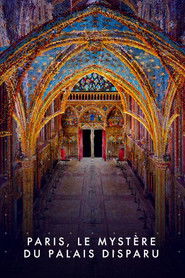
In the heart of Paris, an entire palace has disappeared. It was the very first residence of the kings of France. Long before Versailles, long before the Louvre, the Palais de la Cité stood on the most prestigious island in Paris, the historic cradle of France, facing Notre-Dame. So majestic in the Middle Ages, this palace has become a ghost of history. Over the centuries, this architectural masterpiece has almost completely disappeared. A trio of experts will resurrect it in 3D. Using science and unprecedented excavations, they will track down the pieces of the puzzle to reconstruct it at its peak in the 14th century, and bring back to life those who inhabited it. From the Romans to the Vikings, from Saint Louis to the cursed kings, all have left clues of this 'Versailles of the Middle Ages'.
We have detected that you are using an ad blocker. In order to view this page please disable your ad blocker or whitelist this site from your ad blocker. Thanks!