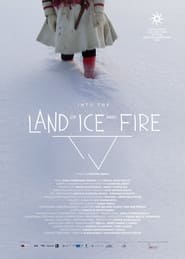
Two parallel stories are gradually unfolding the everyday life of two very different persons - that of 86-year-old Sara and 7-year-old Mihka - both residing in Guovdageaidnu - Kautokeino, in the middle of the Norwegian arctic tundra, through the drastic change of the arctic seasons and the passage from the long winter’s darkness to the never-ending light of the summer season.
This 150-minute documentary, directed by Nobuhiko Ôbayashi on the set of Akira Kurosawa's Dreams, features behind-the-scenes footage and interviews with cast and crew.
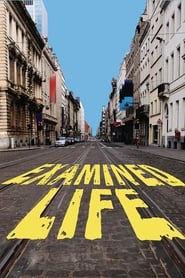
Examined Life pulls philosophy out of academic journals and classrooms, and puts it back on the streets. Offering privileged moments with great thinkers from fields ranging from moral philosophy to cultural theory, Examined Life reveals philosophy's power to transform the way we see the world around us and imagine our place in it.
This new retrospective features new interviews with director Joe Dante, star Zach Galligan, writer Chris Columbus, executive producers Steven Spielberg and Frank Marshall and producer Michael Finnell.
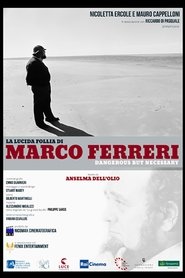
Marco Ferreri: Dangerous But Necessary is a trip through the auteur's singular cosmos - at once supernatural and earthbound. He dropped out of his studies to become a veterinarian, choosing instead to concern himself principally with the human animal, in our corporeal and yearning essence.
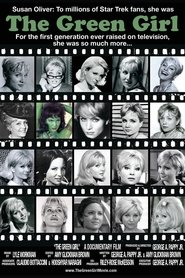
A feature-length documentary about Star Trek's iconic original Green Girl, Susan Oliver: Prolific actress of the '50s - '80s, original member of the American Film Institute's Directing Workshop for Women, record-setting female aviator; Tragically taken by cancer in 1990. With over 120 major acting credits in film and television, Susan Oliver was literally a household name in the 1960's. She set a number of world records as a pilot and was one of the only women directing major TV shows in the 1980's. And yet many people don't even remember her name today. It's time to remember Susan Oliver...
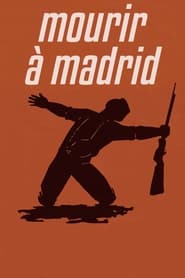
Morir en Madrid brings together several papers on the Spanish Civil War and integrates capturing different points of view, intended to represent the continuity of the suffering of the Spanish during the Franco regime. The death of Federico Garcia Lorca, Guernica, the defense of Madrid, the International Brigades, are some of the items comprised in this document.
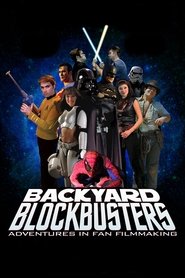
For years, people have been making home movies, many times using pop culture properties that they may not own, but love. In recent years, these types of projects have come to be known as "fanfilms". Backyard Blockbusters looks at the history and influence of the fanfilm genre, as well as the copyright and fair use problems these films create, featuring highlights from and interviews with the creators of many popular films.
This short documentary, presented and directed by MGM sound engineer Douglas Shearer, goes behind the scenes to look at how the sound portion of a talking picture is created.
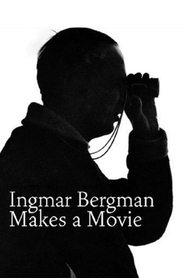
The year is 1961 and Ingmar Bergman is making a movie. While planted on the scene as apprentice to Bergman, Vilgot Sjöman (director, I Am Curious–Yellow, 1967), suggests to Swedish Television that they take the opportunity to record with the acclaimed director. In August, Sjöman and the television crew begin to capture what would become a comprehensive five-part documentary on the making of Winter Light, offering views of script development, set construction and lighting, rehearsals and editing, as well as intimate conversations with Bergman and members of his cast and crew. Footage from the film’s Swedish premiere delivers immediate audience reactions and the critics’ reviews the following day.
The classic film that inspired the National Geographic Series. Join a global quest with world-class climbers in pursuit of the ultimate goal: the first ascent. Featuring Dean Potter, Timmy O'Neill, Sonnie Trotter, and the amazing Didier Berthod on his quest for the first ascent of the Cobra Crack.
In Japan, thousands of people disappear voluntarily every year. And there are companies ready to help those who want to disappear without a trace and start a new life somewhere else. Meet some of them in a film that soberly examines a modern phenomenon.
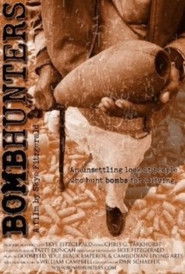
Bomb Hunters is an engrossing examination of the micro-economy that has emerged in Cambodia from untrained civilians harvesting unexploded bombs as scrap metal. The film explores the long-term consequences of war and genocide in an attempt to understand the social, cultural, and historical context and experiences of rural villagers who seek out and dismantle UXO (unexploded ordnance) for profit. Part of a global economy, these individuals clear UXO from their land in order to protect their families from harm and to earn enough money to survive. Bomb Hunters is an eye-opening account investigating the on-going residual, persistent effects of war experienced by post-conflict nations around the globe, and the complex realities of achieving "peace".
The film takes shape through the form of a video exchange between Hirokazu Kore-eda and Naomi Kawase. Each films the world around them and intimately reflects on their individual struggles with making films. Kore-eda self-consciously reflects on his process, “What does a camera shoot? What does a film capture? The emptiness in my life reflects in my work.” Kawase concentrates on her everyday life and candid moments with her friends, who say, “Hang in there Naomi we are all on your side,” and, “You never keep the promises you make, but I love you anyway.”
We have detected that you are using an ad blocker. In order to view this page please disable your ad blocker or whitelist this site from your ad blocker. Thanks!