Lilian, [92], who suffers from Parkinson's disease, sings at home alone and lonely, until Michael, [45], himself suffering mental health challenges, joins a volunteer group phoning the elderly for company.
While working in a circus in Paris, Victor receives a call from Chile: his mother Gloria is sick and has a few months to live. Victor decides to return to Chile to accompany her and take care of her. Seeing his mother struggling to extend his life, he decides to reconstruct their memories and experiences together, recording everything in a movie while the imminence of death is around them.
In 1972, married biologists George Hunt and Molly Warner make an unprecedented discovery while studying seagulls on one of California’s Channel Islands. To their surprise, a great number of the nesting pairs they observe are both female. George and Molly’s research on “lesbian seagulls” quickly triggers both outrage and jubilation\ in a nation grappling with the rise of the LGBTQ+ rights movement, even as it threatens to tear apart their own relationship.
In early summer 1989, Helke Misselwitz portrays young musicians in a band who produce their music on other people’s waste items. The four boys call themselves "Bulk Rubbish" and they drum out their resentment, having grown up on the new housing estates of East Berlin. A straight-up picture of the GDR youth is presented here, which in no way conforms to the official image. The film crew concentrates on the observation of the boy Enrico and his mother Erika: when the mother marries in the West, her son decides to stay in East Berlin, bidding her farewell at the border-crossing. Only shortly after, the tables are turned again: as the events in Berlin leading up to the fall of the Wall are practically captured live from the film crew, Enrico insists on maintaining his cultural identity, even after the fall of the Wall. The "Bulk Rubbish" musicians want to remain citizens of their own state and perceive the looming reunification with scepticism.
In 1972, the camera eye observes Friedensreich Hundertwasser in the ambiance he has created for himself and presents a wide selection of his beautifully coloured pictures, which are owned by collectors all over the world, while the artist himself speaks about his life, his work, his ideas, and his manifestoes.
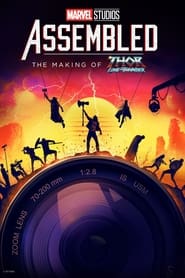
Settle in with the likes of Taika Waititi, Chris Hemsworth, Natalie Portman, Christian Bale, and Tessa Thompson, and as they divulge the secrets behind the creation of Thor: Love and Thunder. Through in-depth interviews with cast and crew, along with raw, unseen footage from the set and beyond, this documentary special pulls back the curtain on the God of Thunder’s fourth feature film.
In this 2003 featurette, John Williams recalls composing the music for the first three Indiana Jones pictures and alludes to the possibility of scoring a fourth.
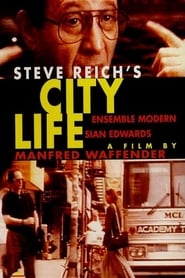
Delve into the life story and professional career of musical genius Steve Reich, considered one of the greatest American composers of the 20th century. Manfred Waffender's documentary reveals how Reich's minimalist style and phrasing innovations have altered the direction of musical history. Special attention is paid to "City Life," a collection of everyday streets sounds brought together to create an aural representation of the urban landscape.
After the fall of the Berlin wall, much changed in Yugoslavia, that is now ex-Yugoslavia; a post industrial, post modern, post national, post colonial, post structural society, that can be perhaps summarized in the concept of post socialism? The disintegration of the concept of ideology means that notions are no longer clear. Because we think that we are outside an ideological context, but perhaps we ourselves are the centre of the ideology. It is this idea that corresponds with the thoughts about post socialism in the nineties, and probably the post ideological society of late capitalism as well. The end of the ideological period then perhaps seems imminent. These thoughts are considered in this philosophical media reflection, based on documentary fragments, statements by Peter Weibel and Slavoj Zizek and the works of three artists: Mladen Stilinovic (Zagreb), "Kasimir Malevich" (pseudonym, Belgrade) and IRWIN (Ljubljana).
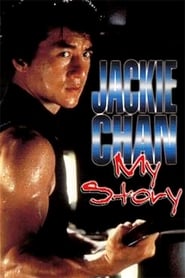
Jackie Chan is one of the world's biggest action stars, famed for his wacky sense of humor, remarkable martial arts techniques, and willingness to perform incredible stunts without the use of doubles -- or a net. This video takes a personal look at Chan as he works on screen projects in Hollywood and Beijing and candidly discusses his life and work.
1920’s Surrealist artists Claude Cahun and marcel Moore come to life in this hybrid documentary. Lesbians and step-sisters, the gender-bending artists lived and worked together all their lives. Heroic resisters to the Nazis occupying Jersey Isle during WWII, they were captured and sentenced to death. Award-winning filmmaker Barbara Hammer infuses this film with vigor using photographs, archival footage, dramatic interludes of a “found Cahun script”, and unique interviews of Jersey Isle residents who knew the “sisters”.
A story about the unorthodox life of the groundbreaking Swedish journalist and author Ester Blenda Nordström (1891-1948). In a very restrictive time for women she travelled the world, always returning to her secret love, Carin, in Stockholm.
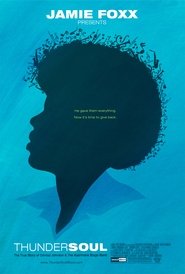
Jamie Foxx presents the inspiring true story of high school band leader Conrad O. Johnson, who transformed his ragtag jazz band students into a legendary funk powerhouse that took the nation by storm.
THE LAST HAPPY DAY is an experimental documentary portrait of Sandor (Alexander) Lenard, a Hungarian medical doctor and a distant cousin of filmmaker Lynne Sachs. In 1938 Lenard, a writer with a Jewish background, fled the Nazis to a safe haven in Rome. Shortly thereafter, the U.S. Army Graves Registration Service hired Lenard to reconstruct the bones, small and large, of dead American soldiers. Eventually he found himself in remotest Brazil where he embarked on the translation of “Winnie the Pooh” into Latin, an eccentric task that catapulted him to brief world-wide fame. Sachs’ essay film uses personal letters, abstracted war imagery, home movies, interviews and a children’s performance to create an intimate meditation on the destructive power of war.
Homestretch chronicles the pairing of two unlikely groups, prison inmates and end-of-career racehorses, as they come together on prison farms. The transformations in both the horses and the prisoners challenge stereotypes and, for some, offer hopes of redemption.
Geri, 18, is a Bulgarian girl living in an orphanage in the city of Vratza. She's a senior at local high school. She's dreaming of entering university. The final exams are approaching, and this has even bigger meaning for her than to many others, because after the graduation she is obliged to move out from the orphanage. Geri starts to go through her past with her stepbrother; the domestic violence behind the breakup of the family. She would love to know why her mother abandoned her and why she was not given to a foster family but had to grow up at the orphanage. She hesitates should she invite the mother to her prom. Geri also had a boyfriend who wanted her to quit the school and emigrate to Germany. He returns for the prom. The prom night is wonderful, full of hope and joy, but there are new twists of fate looming around the corner. Can Geri overcome her past or repeat the family's old mistakes in different form?
An epic documentary film that sends nine scientists to extraordinary parts of the world to uncover unexpected answers to some of humanity’s biggest questions. How did life begin? What is time? What is consciousness? How much do we really know? By introducing researchers from diverse backgrounds for the first time, then dropping them into new, immersive field work they previously hadn’t tackled, the film pushes the boundaries of how science storytelling is approached. What emerges is a deeply human trip to the foundations of discovery and a powerful reminder that the unanswered questions are the most crucial ones to pose. Directed by Emmy-nominated and Peabody Award-winning filmmaker Ian Cheney and advised by world-renowned filmmaker Werner Herzog, The Most Unknown is an ambitious look at a side of science never before shown on screen.
We have detected that you are using an ad blocker. In order to view this page please disable your ad blocker or whitelist this site from your ad blocker. Thanks!