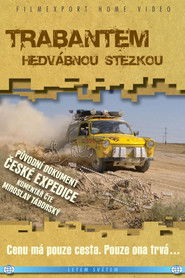
In July 2007, a three-member expedition set off in a Trabant along the Silk Road to the deserts of Central Asia. The odometer of the small yellow Trabant has clocked up 15,000 kilometers. Half of Europe and most of Central Asia have disappeared beneath its wheels. After six weeks spent in its cramped interior, Dan Přibáň, Vladislav Růžička, and Jan Martin Kozel traveled through Central Europe, the Balkans, Turkey, Iran, and Turkmenistan, before turning west again in Samarkand, Uzbekistan, and returning home via Kazakhstan, Russia, and Ukraine. 15,000 kilometers is a very long journey, during which many details can be lost.
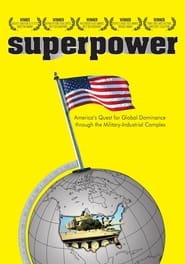
Superpower illustrates how the United States has leveraged its position to ensure unilateral world domination through absolute economic and military superiority and government deception.
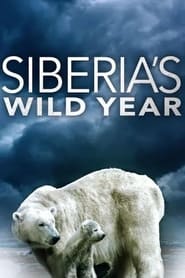
Only the hardiest animals are capable of carving out a life in Siberia. Over a wild year, polar bears, reindeer, red-crowned cranes, cherry salmon and least weasels must endure a long unforgiving winter and take advantage of the brief abundance of spring.
Joe Leahy is the half-caste son of one of the first explorers of the Papua New Guinean interior. The documentary explores his relationship with the tribes that work his coffee plantation and explores what happens when the coffee market situation becomes more difficult.
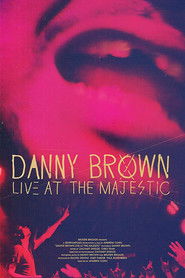
Danny Brown: Live at the Majestic, chronicles the rise and creative process of one of the most unique, eccentric and acute figures in hip-hop today. The documentary invites viewers into Brown's life and tour days leading into his critically acclaimed 2016 album Atrocity Exhibition, with an intimate look into his life never before revealed. The film was directed by Emmy-Award winning documentary filmmaker Andrew Cohn (Medora, Night School, Warriors of Liberty City) and produced by two time Emmy-Award winning producer Rachel Dengiz (The Punk Singer, Park Bench with Steve Buscemi, Medora).
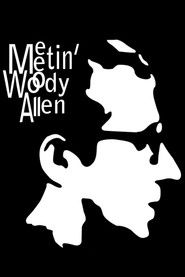
Revolutionary French New Wave director Jean-Luc Godard conducts a twenty-five minute interview with influential and acclaimed American director Woody Allen on the cultural radiation, the ubiquity and significance of Television, and how Television compares with cinema as a medium and form of expression.
Nine-year-old prodigy Xin Ben takes lessons from Daniel Mergler, a piano teacher at the end of his career. In this remarkable story about a student and her mentor, Xin Ben and Mergler meet 26 times over the course of one year. During this time, Xin Ben illuminates Mergler's final months as an instructor with her youthful talent, and he, in return, lovingly guides her towards a life in music.
Cicada is the immersive story of a five-year-old child who witnessed a murder. Daniel P Jones confronts a traumatic memory in an incendiary, visceral monologue.
The National Iranian Oil Company (NIOC), formed upon nationalization of the British Anglo-Iranian Oil Company, employed film systematically, producing many films on oil and petrochemical subjects. It also made films depicting Iran's progress and modernization, highlighting the role of the Shah and NIOC in that direction. Under its auspices, Ebrahim Golestan directed A FIRE (1961), a highly visual treatment of a seventy-day oil well fire in the Khuzestan region of southwestern Iran. This film was edited by the Iranian poet Forough Farrokhzad and won two awards at the Venice Film Festival in 1961.
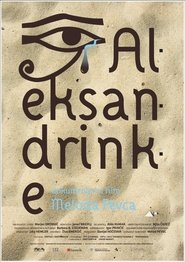
Young mothers and sometimes also their daughters have vastly travelled from Vipavska valley to Egypt in 20th century. Their families were poor and needed money. So they went to Alexandria and worked as wet nurses and helpers for wealthier people. They often left their own kids alone with their fathers, only taking care for them with gifts and money. Many never returned and even if they did, they were not well accepted.
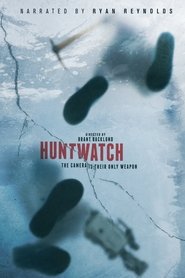
Seals, lies and videotapes. Violent confrontation boils over on the ice floes of Canada as activists, fishermen and politicians battle over the fate of baby seals.
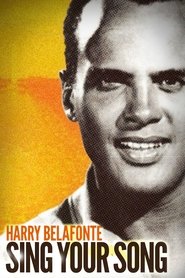
Most people know the lasting legacy of Harry Belafonte, the entertainer. This film unearths his significant contribution to and his leadership in the civil rights movement in America and to social justice globally.
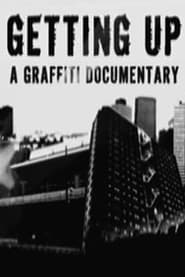
A documentary short on the history and culture of graffiti, featuring many of the major players such as JA, Ket, Noxer, Skuf, Chino and more. Produced by Ecko Unltd and released in conjunction with the video game Mark Ecko's Getting Up: Contents Under Pressure.
Guy Martin joins the two-year restoration of a Spitfire that was buried in a French beach for decades, and tells the Boy's Own-style story of its pilot, Squadron Leader Geoffrey Stephenson
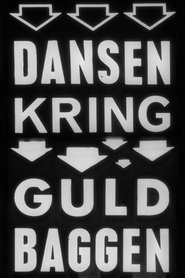
Filmed during the first ever Guldbaggen (golden scarab) awards, it was edited and developed that night and shown for the first time to the guests at the after party.
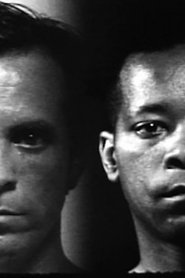
An exploration of chiaroscuro, nudes, movement and film techniques in constantly shifting fields of perception. Eroticism and humor highlight an interracial couple engaged in a tableau vivant of opposites and attractions.
We have detected that you are using an ad blocker. In order to view this page please disable your ad blocker or whitelist this site from your ad blocker. Thanks!