During May 2001, Chilean filmmaker Miguel Littin traveled through historic Palestine, documenting everyday life amid the war—more precisely, the existential distance between a child throwing stones with a slingshot and tanks filled with artillery.
The film takes shape through the form of a video exchange between Hirokazu Kore-eda and Naomi Kawase. Each films the world around them and intimately reflects on their individual struggles with making films. Kore-eda self-consciously reflects on his process, “What does a camera shoot? What does a film capture? The emptiness in my life reflects in my work.” Kawase concentrates on her everyday life and candid moments with her friends, who say, “Hang in there Naomi we are all on your side,” and, “You never keep the promises you make, but I love you anyway.”
Interweaving lives of LGBT personalities compose this documentary about the struggles and hopes of a queer community living in the country’s premiere city.
Robert Mapplethorpe gets his nipple pierced while his boyfriend lends his support in person. Patti Smith lends her support via voice over as she rambles on about her childhood, her transvestite brother, her breasts and Bob Dylan?
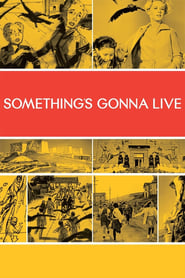
The Los Angeles Times Critics' Pick Something’s Gonna Live is an intimate portrait of life, death, friendship and the movies, as recalled by some of Hollywood's greatest cinema artists. Academy Award®-nominated director Daniel Raim (The Man on Lincoln’s Nose), captures the late life coming together of renowned art directors Robert Boyle (North by Northwest, The Birds), Henry Bumstead (To Kill a Mockingbird, The Sting) and Albert Nozaki (The War of the Worlds, The Ten Commandments), storyboard illustrator Harold Michelson (The Graduate, Star Trek: The Motion Picture), and master cinematographers Haskell Wexler (Who’s Afraid of Virginia Woolf?, Medium Cool) and Conrad Hall (In Cold Blood, Butch Cassidy and the Sundance Kid). These prolific artists have worked on a total of 400 films, garnering 25 Academy Award® nominations and 8 wins.
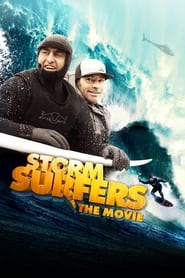
This pulse-racing real-life adventure follows two of Australia's greatest surf legends on their quest to hunt down and ride the Pacific's biggest and most dangerous waves. With 3D cameras installed on their boards, Ross Clarke-Jones and Tom Carroll defy middle age by pushing the limits of what they — and cinema technology — can do.
10 short documentaries which form a presentation of Denmark as part of a dialogue project in the wake of the Muhammed drawings. 10 reputable Danish filmmakers are invited to create 10 presentations of Denmark, in collaboration with second-generation immigrants with roots in the Middle East. Each film is shaped as this person's personal application to a relative or acquaintance in the Middle East. The assignment is: Give an important statement about your Denmark, with the intention of challenging and differentiating the image your relative or acquaintance has of Denmark. The strength of the films is in insight and reflection, rather than the dramatic news approach and is communicated through the personal approach to the subject. The 10 films are joined together into one film (duration 58:30 mins), and this film will be a quick and intense contribution to the debate following the publication of the Muhammed drawings.
An intimate portrait of Jane Goodall: a radiant spirit with a sharp wit, a deep curiosity about life and death, that next great adventure’ and a remarkable resilience in the face of a changing world.
Why does a housewife concerned for her family's welfare feed them so inadequately that she endangers their very lives? The film is a humorous and satirical attempt to remind the average housewife that it is not enough to be aware of modern food facts; they must also be applied in daily food purchasing and preparation. (NFB)
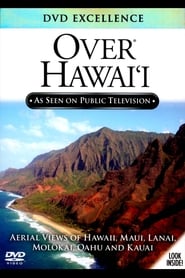
Go to the Big Island and hover above erupting craters at Hawaii Volcanoes National Park, watch flowing orange lava ooze across charred rock and steam billow from the Pu'u 'O'o Vent. Glide over Maui's Haleakala National Park and discover the diversity of Hawaiian landscapes. Island hop to Lanai for spectacular beaches. Visit Pearl Harbor from above and the memorial sites before exploring the rest of Oahu. Narrated by Tom Skerritt
Documentary on the 18-month renovation of the large Pathé Wepler cinema on the Place de Clichy in Paris. This 1,600-seat cinema is a landmark in the heart of a working-class district of Paris. The cinema becomes a twelve-screen multiplex.
Following the July 2015 shooting in Chattanooga, Tennessee, Peyton Manning sets up a fund to benefit the families of the service members and police officers who were killed.
The opening segment for a planned larger documentary by Johan van der Keuken. Unfortunately, this is all that was completed before his death. These are small portraits of people he met during his travels.
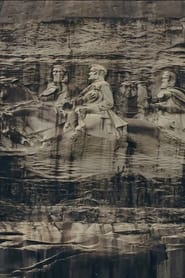
A stirring portrait of residents in a small southern US town facing the contentious legacy of the world's largest Confederate monument, which looms over their home.
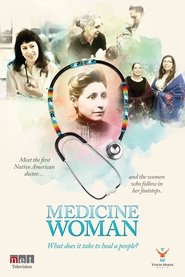
America's first Native doctor, Susan La Flesche Picotte (1865-1915) studied medicine at a time when few women dared. She graduated first in her class and returned home to serve as doctor to her Omaha tribe. During this heartbreaking and violent time she never gave up hope. The reverberations from her shattered world continue today as Native Americans suffer from alarming rates of disease, suicide and mental illness. Like Susan, these modern day medicine women from the Omaha, Lakota and Navajo tribes are fighting a war and sharing a confident, even joyful, approach to the work of healing.
Following on from the 2006 Israeli aggression on Lebanon, the filmmaker tries to film the destruction of Beirut. We witness a city deserted by life, and ghostly characters who, featured in his earlier films, talk about living through such a war.
We have detected that you are using an ad blocker. In order to view this page please disable your ad blocker or whitelist this site from your ad blocker. Thanks!