The old homestead involved had been passed from father to son and was about to be wrested from them by an avaricious corporation. Lawsuits were started, but the corporation managed to gain the best of the argument, when Ruth took the law into her own hands, held up the coach, and stored the big strong box in the bushes. Notices offering big rewards were posted conspicuously and Ruth lost her fortitude. The reward was increased, Ruth disclosed the location of the treasure, but refused the reward. The company's agent lost his nerve, and as appreciation, deeded back the old homestead to Ruth.
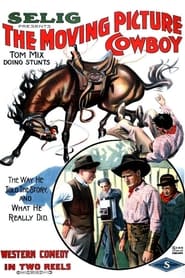
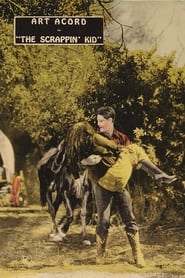
Luke Barns obtains employment with a moving picture concern as a cowboy and declares himself capable of performing any or all feats such as cowboys are supposed to perform.
Spitzer wants the Gordon ranch, so he has his men waylay and rob him as he returns with money. Dick finding the body also finds a blood soaked money wrapper, a clue that will help him find the culprits.
Frank Wendell, a ranchman, also the sheriff of his county, is about to leave home on the rounds of duty one morning when a buckboard drives up to the house, and a gentleman, whose careful grooming and style of dress signifies a man from back east, alights and presents Wendell with a note from a former friend of the ranchman, introducing Mr. Frederick Church, who desires to spend a few weeks on Wendell's ranch for the purpose of bettering his health. Unsuspecting the true character of the stalwart Easterner. Wendell welcomes him and, with the big hospitality of the Western householder, tells him to make himself at home. A month goes by and with its passing a tragedy. Wendell returns home one evening to find the Easterner and his wife and child gone.
"Saturday Night Square Dance" was released in 1949 as a Soundie. Featured here are Jim Boyd and His Men of the West. Jim Boyd was the brother of Bill Boyd, well known for western swing music, and this film combines some western swing music with calls. The footage shows some fine examples, like the styling sometimes called the Abilene Lift.
It is a beautiful morning in Indian Summer, and White Doe is out in her birch bark canoe, engaged in a fishing expedition for food. She paddles home under the overhanging trees and vines, lights the small fire in front of her tepee and cooks her primitive breakfast. The air is bracing, the birds are singing, life is free and good. Also White Doe is happy for she had caught a gleam of admiration in the eyes of a stalwart cowboy, when she visited a ranch a few days before with her offering of plaited baskets and the famous blankets of her Navajo tribe. She begins her work of basket weaving, dreaming the love dreams of her people and her heart singing with coquetry and the happiness of conquest, for she is also loved by a brave of her tribe, a wealthy son of a chief with a hundred horses.
Dan Coughlin, a ranger, comes upon a band of smugglers and succeeds in capturing one of them, a half-breed Mexican, "Easy" Joe by name. Joe is taken to headquarters and locked up, while all efforts to wring a confession from him as to the whereabouts of the band's rendezvous have failed. It is not long, however, before the others of the gang make an effort to liberate their pal and send an Indian to spy upon Dan and other members of the troupe.
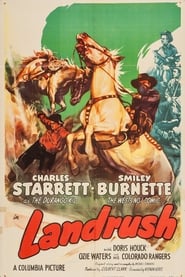
The Durango Kid rides again in Columbia's Landrush. As ever, the masked do-gooder, alias Steve Harmon, is played by Charles Starrett. Bringing up the rear in every sense of the word is Harmon's comical sidekick Smiley Burnette. In this outing, Harmon dons his Durango garb to rescue a group of homesteaders from scurrilous villains. Musical relief is provided by Ozie Waters and his Colorado Rangers.
Bill Bradley, who owns a small house and a one-horse corral in the hills, saves the lives of Betty Brent and her brother Mike from a forest fire in which their mother has perished. He decides to take care of them. When word spreads that Betty is actually 18, a committee of citizens, headed by Cliff Barrowes, whose father holds a mortgage on Bill's property, calls to protest; the sheriff's wife offers the children a home; and soon after, Cliff begins to woo the girl. Bill, meanwhile, is forcibly held by a trio of outlaws about to flee across the border.
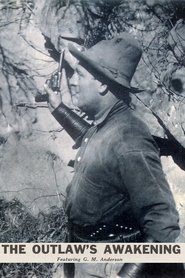
The Outlaw, preparing to rob the stage, receives a letter from his wife, telling him to lead a good life for the sake of her and his baby, and informing him that he may expect them any time. Filled by remorse, he refuses to accompany his companions on their hold-up. As he rides away, he sees a sign offering clemency to the unknown robber if he will give up his gun. He seeks out the sheriff, surrenders the gun and goes on his way. But the stage is held up and the pursuing posse arrests him. Rendered desperate, he makes his escape and prepares to resume his criminal career. But the posse captures the real bandit.
Broncho Billy and his brother are both in love with the same girl, but she decides to marry Broncho's brother. One Sunday morning an outlaw creates a panic in the church by "shooting up" the place. The sheriff, who is the girl's father, is shot when he attempts to arrest the outlaw. Broncho's brother is offered the sheriff's star, but is afraid to take it.
We have detected that you are using an ad blocker. In order to view this page please disable your ad blocker or whitelist this site from your ad blocker. Thanks!