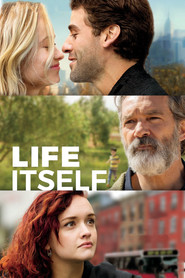
A young single father trying to find the strength to love. A feminist librarian, single by conviction, who’s decided that she won’t be a mother. A six-year-old child trying to find a place in a new family structure. By revealing their aspirations, their fears, their choices, Carine Tardieu depicts different ways in which humans create families.
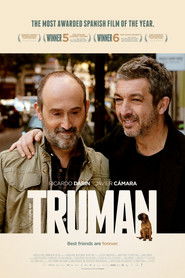
Tomás, who lives in Canada, travels to Madrid, Spain, to visit his old friend Julián. Both of them, accompanied by Truman, Julián's faithful dog, will share many surprising and emotional little moments, triggered by the hard situation Julián is going through, for just a few days.
During World War II in North Africa, a group of British commandos disguised as Italian soldiers must travel behind enemy lines and destroy a vital Nazi oil depot.
Kotaro visits Komada Distillery for a project on Japanese craft whisky. Led by young female president Rui, who took over the family business, the distillery works hard to reproduce its signature whisky, Koma, which they had to stop making years ago. However, not to mention financial backing, too many clues are missing to revive the once lost whisky.
Sam and Tusker, partners of 20 years, are traveling across England in their old RV visiting friends, family and places from their past. Since Tusker was diagnosed with early-onset dementia two years ago, their time together is the most important thing they have. As the trip progresses, however, their ideas for the future clash, secrets come out, and their love for each other is tested as never before. Ultimately, they must confront the question of what it means to love one another in the face of Tusker’s illness.
Arrogant, self-centered movie director Guido Contini finds himself struggling to find meaning, purpose, and a script for his latest film endeavor. With only a week left before shooting begins, he desperately searches for answers and inspiration from his wife, his mistress, his muse, and his mother.
A restless teenager escapes her troubled home and joins a traveling crew of young drifters selling magazines across the American Midwest. Immersed in a world of reckless partying, risky hustles, and fleeting romances, she searches for freedom and belonging on the open road.
In a story that spans billions of years, a buoy and a satellite meet online long after humanity’s extinction. As they learn what life was like on Earth, they discover themselves and what it means to be alive and in love.
As a young New York couple goes from college romance to marriage and the birth of their first child, the unexpected twists of their journey create reverberations that echo over continents and through lifetimes.
Susan's baby dies, and she is convicted for a crime she doesn’t even remember committing. Years later, out on parole and fighting to start over, Susan sees a photograph that stops her cold.
12-year-old Oriko Seki, who lost her parents in a car accident, ended up living in her grandmother's Onsen Ryokan "Haru no Ya." With the ghost "Uribou" cohabitating with her and all the other odds, she ended up training to be a young female innkeeper. At first, she didn't like the training, but gradually felt her admiration for her title and began to train seriously. Thus, the growth of the young warrior Oriko begins.
As Batman hunts for the escaped Joker, the Clown Prince of Crime attacks the Gordon family to prove a diabolical point mirroring his own fall into madness.
When Sophie's son, Garrett, develops a mysterious illness, she embarks on a search for answers. This leads her into the controversial world of Genetically Modified Organisms (GMOs) where a sociopolitical battle rages between organic farmers and big biotech corporations. As her desperation grows, so too does her quest for knowledge. And the deeper she goes, a more heightened sense of danger develops that preys on her state of mind, as she attempts to discover the root cause of her son's illness.
Athlete Diana Nyad sets out at 60 to achieve a nearly impossible lifelong dream: to swim from Cuba to Florida across more than 100 miles of open ocean.
We have detected that you are using an ad blocker. In order to view this page please disable your ad blocker or whitelist this site from your ad blocker. Thanks!