In the wake of a draft coming off the heels of a newly begun war in the Pacific, families must now decide how best to navigate this difficult situation on the home front. The men and boys of America must make a choice: Go to war for globalist banking interests and crony politicians, or fight back against the greatest threat to their families' freedom; their own government.
Oleg's painstaking search for freedom is interrupted by the sudden return of his ex-girlfriend back to Ukraine, calling into question Oleg's lifestyle in the context of the Russo-Ukrainian War.
From 1945 to 1989, after the capitulation of Nazi Germany, two rival ideologies, communism and capitalism, faced each other in a merciless battle.
On one side of the Iron Curtain and on the other, throughout the Cold War, the USSR and the United States sought to shape children’s imaginations through their magazines and films. Never in the history of mankind have so many comic books been published and so many cartoons produced for young people.
In November 1989, communism collapsed with the Berlin Wall; capitalism was left to decide the future of the world. What if this victory had been prepared for a long time, and our thinking conditioned, from our early childhood, to ensure this absolute triumph?
The main character of the film is a journalist — Liza, a woman in her mid-forties, who, 25 years ago, worked as a war reporter during the Georgian-Abkhazian military conflict (1992-1993), which Russia provoked for the purpose of occupying Abkhazia.
J. Robert Oppenheimer and other key figures involved in the decision to drop the first atomic bomb discuss their motivations in this NBC News documentary. Originally produced and televised in 1965, two decades after the bombings of Hiroshima and Nagasaki, it was re-released in 2023 with an epilogue by Michael Beschloss, NBC News Presidential Historian.
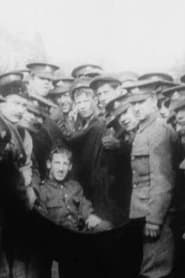
In New York's Washington Square, a poet named Karl (Jack Livingston) is the king of art and artifice. But World War I breaks out and the spotlight on him begins to fade, so he dramatically declares his intention to enlist in the British Army. His friend Marcarson announces that he will go with him, keeping Karl to a promise which he hadn't planned to see through.
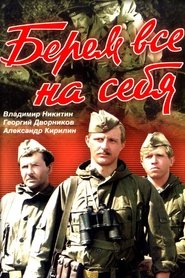
During the final months of the World War II, a group of special forces sailors, under the command of Lieutenant Balandin, receives a secret order of special importance to destroy enemy tankers, seaplanes and gun installations to ensure the free landing of their troops.
The main character in the film is a real person in history - the hero of the Vietnamese people's army, Cu Chinh Lan, set in the middle of the resistance war against the French (circa 1951) on the battlefield in North Vietnam.
The first movie based on the life of the last sovereign Nawab of Bengal, Bihar and Orissa and the historical events of the Battle of Palaashi was directed by Khan Ataur Rahman. Anwar Hossain played the role of the doomed Nawab. Khan Ataur Rahman and Anowara played other major roles in the movie.
“The Singer: A Montford Point Marine” tells the story of Henry Charles Johnson, one of the first African Americans in the U.S. Marine Corps and a professional crooner. Lured by the dignified Marine uniform and the allure of the G.I. Bill, he's abruptly thrown into the bare, segregated world of Camp Montford Point, a far cry from the lush expansiveness of Camp Lejeune he'd imagined. The harsh realities of Southern segregation strike a jarring contrast to his accustomed diversity of Manhattan, escalating further with hostility from drill instructors. Undeterred, his resolve is galvanized by the dream of donning the Marine uniform and the prospects following discharge. Post-discharge, Johnson immerses himself in New York's music scene, enchanting audiences with his soulful, Sinatra-esque timbre. This riveting narrative portrays the unmatched fortitude of the Montford Point Marines, representing a crucial African-American, American, and globally relevant human experience.
After the Germans flooded large parts of The Netherlands towards the end of WWII, the Brouwer family find themselves trapped in their attic surrounded by water. With their rations dwindling, tensions arise within the household.
Sicily, July 10, 1943: the US army lands in Gela, where some divisions encounter strenuous resistance from the Italian army. The marines, in an attempt to escape to safety, are dispersed through the Sicilian countryside. A small task force luckily meets Robert Capa: the great photojournalist, who launched himself at the first light of dawn together with the soldiers of the ill-fated 82nd division, awaits help hanging from a tree. The group of soldiers, with the photojournalist and a wounded comrade, stops at a farm of poor Sicilian shepherds. John Mancuso, marine of the first infantry division, discovers that his father's birthplace is in nearby Niscemi, and wants to go and see it. He will get help from little Salvatore.
A married couple living in a remote farm find themselves in the midst of war, where many different sides walk through the area. They attempt to save their lives and stay neutral despite accusations of being traitors that every army brings upon them.
This Vitaphone 'Technicolor Special' (production number 8001) portrays the behind-the-scenes story of the building and manning, during World War Two, of the USA supply line to Victory against the Axis powers, the United States Merchant Marine service.
We have detected that you are using an ad blocker. In order to view this page please disable your ad blocker or whitelist this site from your ad blocker. Thanks!