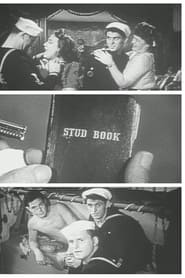
This film was made by the U.S. government during World War II to show its young servicemen the results of "fooling around" with "loose women" overseas. Actual victims of such sexually transmitted diseases as syphilis and gonorrhoea are shown, along with the physical deterioration that accompanies those diseases.
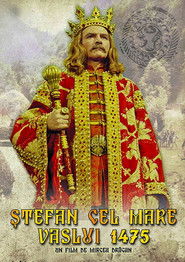
In 1475 when Stephen the Great, ruler of Moldavia is facing an invading Ottoman army of 120 000 men, the fate of Christian Europe largely depends on the battle's outcome.
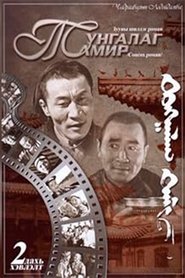
The image of the Mongolian countryside, the struggle for freedom, and the changes in the minds of the people of the new social relations are reflected in the form of an epic. The main characters of the film are the well-known characters such as Erdene, his wife Dolgor, the rich Itgum, and Timur, a good glass man called "silicon", and the complex events of their lives. appears.
On March 24, 2004, Patricia, a teacher from Monte Grande, saw on television President Néstor Kirchner take down the portrait of Videla and other de facto presidents of the military dictatorship from the Military College. This image repeated itself in her mind, leading her to retrieve from her box of memories the letters addressed to the soldiers of the Malvinas War, which she had saved from destruction when she worked as an administrator at the Municipality of Monte Grande. She then decided to give meaning to that event by starting to deliver the letters that had never arrived.
73 BC pre-Columbian New World. A humble soldier rises unexpectedly as the protector of a young republic. Now Chief Captain of a war-weary nation, Moroni defends his country with revolutionary prowess, but his greatest struggle will be uniting a beleaguered people.
The American Civil War is the setting for this film which portrays the efforts of a girl, with the aid of her boyfriend, to deliver a message to the Confederate army while the Yankees try prevent them. After disguising themselves as Yankee soldiers, Nan and her young man are recognized, chased, and the young man killed. Nan manages to deliver the message but only after being shot herself, collapsing after the commander is in possession of the important news.
Muslims and Christians clash in this thoughtful Filipino war movie. Kiram Sali and his Muslim rebels launch a series of attacks on the army but his brother Omar would just rather see his country in peace. Following the rebel's murder of Army General Basco, holy war follows. Omar turns to violence and ends up in a showdown with General Basco's best man Captain Reyes.
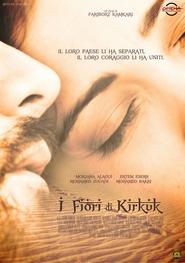
Cruel politics and intensive love. Najla (N) has just finished her medical studies in Rome. Sherko (S) conceals sick and injured partisans. Mokhtar (M) belongs to the dictator's police. S and M love N, N loves S. When she gets a letter from S that she must forget him, she returns to Kirkuk. As a doctor she can help S. Mokhtar follows her trail and S and N are arrested. S is tortured. N is beaten up and then offered the job as a police doctor, a reward for leading the police to S. She accepts because then she can collect and pass on the names of people murdered or tortured. She will attend many mass murders of women and children. Once she can save them by fabricating that a child has cholera, with greater risk of contamination if she is dead. – When M understands that he cannot win N's love, he smuggles both N and S out of the country. Fully aware of the consequences he distracts the border guards and is shot by them. Max Scharnberg, Stockholm, Sweden
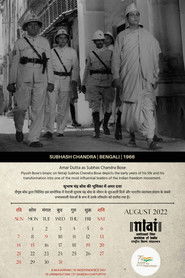
Based on the life of the legendary figure of Indian freedom movement Netaji Subhash Chandra Bose, this Bengali classic narrates the life of young Subhash Chandra, his childhood, college days, passing ICS, early political campaigns and police arrest. Master Ashish Ghosh and Amar Dutta played the role of Child Subhash and Subhash Chandra respectively.
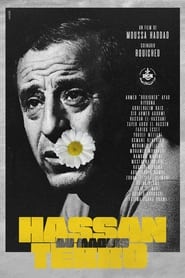
While trying by all means to stay out of the bloody turmoil caused by the Battle of Algiers, Hassan, an honest and naive family man, is wrongfully accused of terrorism by the French colonial army in "Hassan Terro." After escaping in "The Escape of Hassan Terro," Hassan is forced to join the resistance in "Hassan Terro in the Maquis."
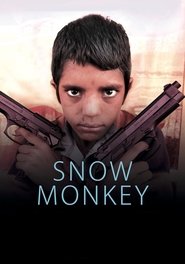
For almost 50 years, activist artist George Gittoes has stood on the frontlines of the world's most brutal conflicts and borne witness to the best and the worst of humanity. Now living in Afghanistan's remote, Taliban-infested Jalalabad province, Gittoes turns his attention to the lives of the children and outcasts of this war-torn land. In Snow Monkey, Gittoes paints a portrait of a Jalalabad seething with humanity, adversity and hope – focusing on three gangs of children: the Ghostbusters, persecuted Kochi boys who hawk exorcisms of bad luck and demons; the Snow Monkeys, who sell ice cream to support their families; and the Gangsters, a razor gang led by a nine-year-old antihero called Steel, terrifying to the core but still capable of experiencing aspects of the childhood seemingly taken from him. With a deeply humane vision that won him the Sydney Peace Prize, Gittoes shows us the unseen nature of Afghanistan's politics, culture and society, up close and startlingly personal.
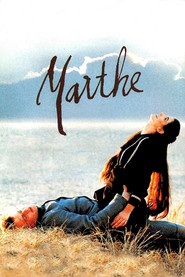
This Great War drama opens in the trenches during an artillery bombardment. Receiving bayonet wounds, young Simon (Guillaume Depardieu) drops out of the action, joining other injured soldiers at a Brittany hospital. One day he meets schoolteacher Marthe (Clotilde Courau), who lives in the household of the hospital's head doctor (Bernard Giraudeau). Soon a romance begins to develop. Cinematography by Kevin Jewison, son of director Norman Jewison.
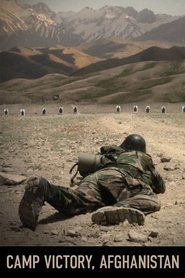
Camp Victory, Afghanistan is the true story of the American Exit Strategy. Using 300 hours of footage shot over the course of three years, the film follows a battle-tested Afghan General and the steady stream of U.S. National Guard soldiers deployed to train the men of his newly formed battalion. It is the first film to examine the reality of building a functioning Afghan military-- but it is also a story about friendship and the unlikely bonds that form across cultural, political and social barriers.
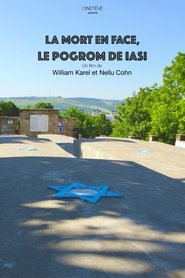
In Iasi, Romania, from June 28 to July 6, 1941, nearly 15 000 Jews were murdered in the course of a horrifying pogrom. At the time, the programmed extermination of European Jews had not yet began. After the war, the successive communist governments did all they could to ensure the Iasi pogrom would be forgotten. It was not until November of 2004 that Romania recognized for the first time its direct responsibility in the pogrom. All that remains of this massacre are about a hundred photographs taken as souvenirs by german and romanian soldiers, and a few remaining survivors.
Punctuated with stories from the Bible, the film’s purpose was to reinforce Christian values in the atomic age by condemning the consequences of human conflict with scenes of the crucifixion, lynching and Nazi fascism.
We have detected that you are using an ad blocker. In order to view this page please disable your ad blocker or whitelist this site from your ad blocker. Thanks!