The tragedy of the Syrian people: War, conflict, loss, migration, exile, asylum, detention, drowning… A deserted place. Abandoned people. Abandoned country. The doors slammed shot; the doors are now locked - the keys thrown away...for what seems forever.
In 1943, the Imperial Japanese Secret Service made a film called Calling Australia! to show the "exemplary conditions" under which prisoners of war were kept, and to "soften up" the Australian public for the anticipated occupation of their country by Japanese forces. Prisoners of Propaganda tells why the film was made, and how it came to be forgotten.
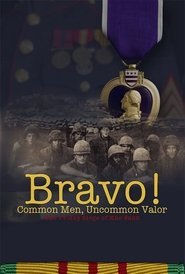
Fourteen Marines and one Corpsman relive their journey from enlistment through the epic 77-day Siege of Khe Sanh during the Vietnam War. Just boys in 1968, they recount their ferocious experience in that wet and isolated battleground, fighting fear and the enemy only to return to a nation at odds with this controversial war. Still today, the Khe Sanh experience simmers just beneath their skin.
The story of the famous Qijiang general Wang Liang (1905-1932). More precisely, the most heroic episode in his miltary career from 1927 to 1932. In early August 1927, Wang Liang, Luo Ruiqing and others originally planned to participate in the Nanchang Uprising. They were blocked when they passed Jiujiang and were detained by the rebel warlord. After successfully escaping, Wang Liang, with the help of Qijiang fellows Liu Sihai, Yang Chunfa and others, went to Xiushui, joined the autumn harvest uprising team, and initially demonstrated his military command ability when attacking Jinping.
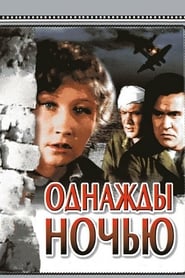
Instead of going to Belgrade, a boy called Mita joins illegal movement. Germans, who occupied Belgrade in the meantime, start to hunt down communists. Many of them are killed, but Mita succeeds to get to the freed land together with a girl who was going to Belgrade with him.
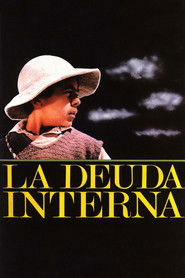
The drama tells the story of an Argentine elementary-school teacher sent by the government to a rural hamlet located in the northwestern province of Jujuy. It shows how he touches the lives of the villagers, especially the young and impressionable boy Verónico, whose mother died and father left to seek work when he was an infant. The film is based on a non-fiction book written by Fortunato Ramos, a rural teacher in northwest Argentina, that discusses his teaching experiences.
Set in Texas in 1867, during the Comanche Wars, the project follows two powerful ex-cavalry men, a war-hungry Colonel, and his seemingly by-the-book executive officer.
Slovak partisans, bravely fighting against Nazi superiority, would never have succeeded to such an extent if they had not been supported by the villagers. Despite the threat of repression, it is the villagers who care for the wounded, hide them, and behave conscientiously. Although the film was made in the late 1960s, it fully adopts the patterns of partisan stories, perhaps the only thing it can be credited with is a more developed sense of authenticity in the story, characters, and setting.
In 1933, as the flames of the Anti-Japanese War spread along the Great Wall front, Wu Zhanyuan (played by Fan Yulin), a regiment commander of a North China army unit, is wounded in battle and reassigned to the relatively peaceful village of Taiping Valley. However, tensions rise between the villagers and the soldiers. During this time, a village widow named Shuihua (played by Li Meike) catches Wu’s attention. The unexpected arrival of Japanese troops shatters the long-standing peace of the village. It turns out Wu’s stationed post is not just a quiet valley, but the strategic stronghold of Taipingyu. Facing a massive Japanese assault, Wu, determined to protect innocent villagers, resolves to sacrifice himself. He leads his outnumbered troops in a fierce and brutal battle against the invaders…
During World War I, a young woman marries a famous flying ace. After the honeymoon, he is called back into service and leaves for the battlefield. Not long afterwards she discovers evidence that her new husband has been cheating on her.
Marlin (Joe Wilcox) and his slightly crazy but loving wife Elvira (Lauren Campbell) are having money troubles in the 1940’s. Marlin seems to have caught his lucky break when a powerful person in the war is interested in him making a propaganda movie for him. Unfortunately the couple may have bitten off more than they could chew.
We have detected that you are using an ad blocker. In order to view this page please disable your ad blocker or whitelist this site from your ad blocker. Thanks!