"Hidden Wars of Desert Storm" looks at the origins of the Gulf War crisis and challenges the official Western "party-line" view of a spontaneous crusade for "Freedom & Democracy". Instead, the documentary exposes the White House and US State Department's hidden agenda in the Gulf as well as the Pentagon's use of radioactive ammunitions made of uranium 238.
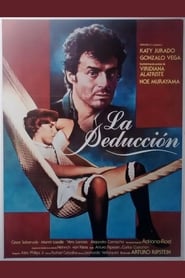
The story of two women, a mother and her daughter, who during the Cristero War set traps for government soldiers passing by their house, using seduction that was never consummated. The idea was to deceive the soldiers by making them feel safe, then hand them over, almost with their hands tied, to the Cristero guerrillas. But then one of the women, the daughter, truly falls in love with one of the soldiers, allows herself to be seduced by him, and then tries to save him, only to be killed, in the circumstances, by the soldier himself.
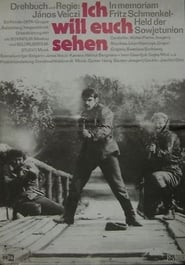
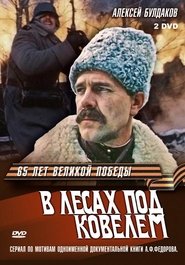
Fritz Schmenkel, a farm worker and soldier in the fascist Wehrmacht, deserts in Belarus in 1941. He wants to survive, makes his way to Russian farmers and comes into contact with Soviet partisans who, after long interrogations by the German teacher and current partisan Miron, take him in as one of their own. Schmenkel proves his reliability in a number of daring actions and is awarded the Order of the Red Banner. In the winter of 1943/44, he is given a reconnaissance mission and falls into the hands of the fascists in Minsk. After days of interrogation, which he withstands, the Nazis execute him.
Somewhere in France, German troops occupy the chateau of Marquis X. The commanding officer see the aged Marquis attempt to signal his daughter Louise, and seizing a paper writes an order demanding her presence. On the paper is a message in code from the Marquis to ring the bell as a signal to the French troops. Louise kills one of the German officers and rings the bell, though she knows it will mean death for her father and herself. The picture fades into a Liberty Bell ringing out "Buy, buy, buy, Bonds."
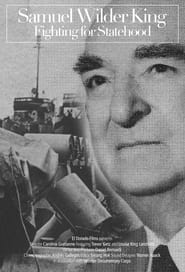
Samuel Wilder King, a descendant of Scottish sailors and Hawaiian royalty, served as a distinguished Naval officer in both World Wars before becoming Governor of the Hawaii Territory. This short film delves into King’s fearless leadership—from navigating the high seas during WWI to fighting against the internment of Japanese Americans in Hawaii during WWII—ultimately championing Hawaii's path to statehood as the 50th star on the American flag.
It was a time with a rise of artistic life in the former capital of Russia. But the rise ended quickly and tragically with arrests and executions. Modern St. Petersburg and Petrograd of 1921 strangely and intricately intertwine in the mind of the director. The cruel, bloody, but romantic world of the first years of the Revolution converge with the artistic and domestic life of contemporary filmmaking on the same ground, on the same streets and squares.
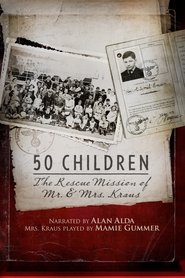
In the spring of 1939, Gilbert and Eleanor Kraus embarked on a risky and unlikely mission. Traveling into the heart of Nazi Germany, they rescued 50 Jewish children from Vienna and brought them to the United States.
During the years of the German Occupation, Dimitris Korres, commander of a police station, is considered a collaborator of the occupiers but everyone, even his daughter Maria, is wrong as he, code-named "OP 34", is one of the leading members of the Resistance. From his post he helps Greek patriots and saves the lives of prisoners, such as Lieutenant Avgeris, whose plane was shot down in Greek airspace. Avgeris is in love with Maria, who tries to help him flee to the Middle East, but they are captured by the Germans. Avgeris, in order not to be harmed, agrees to cooperate with them.
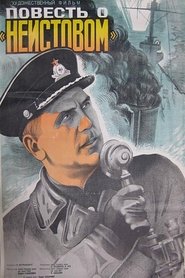
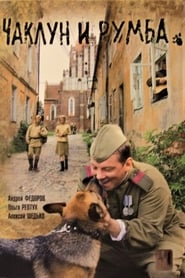
In the center of the lyrical and dramatic narrative is the frontline fate of one of the millions of ordinary soldiers of the Great Patriotic War - sapper Fedor Chaklun and his four-legged assistant - a specially trained sheepdog named Rumba. With the help of Rumba Fedor discovers a mined section of the road and warns about it senior in rank - junior lieutenant Svetlana. But the girl, carried away by flirtation with the lieutenant colonel, forgets to block the road, and a Soviet tank explodes on the mine. Fyodor, in love with Svetlana, takes the blame...
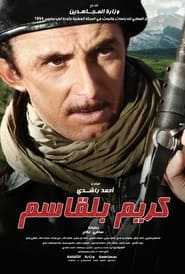
This film retraces the combat journey of Krim Belkacem, one of the leading figures of the Algerian War. When he left the Dellys barracks in October 1945, the day after the Second World War, Krim Belkacem was 23 years old. He is a man revolted by the May massacres in Sétif, Guelma, Kherrata and several other localities in the ravaged country. But it is also and above all a young Algerian who questions the future of Algeria. On March 21, 1947, Krim at the age of 25, he dug up his "Sten" submachine gun, he took action against the boss of his douar who was none other than his cousin. He goes into hiding with six companions. He meshes this entire part of Algeria with a dense and dense network with the sole objective of taking action which will lead to the outbreak of the armed struggle on November 1, 1954.
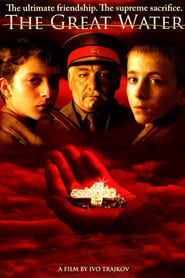
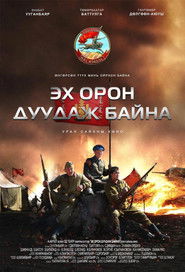
The film depicts the struggle of brave men and women who sacrificed their lives for their homeland, their love, and everything they held dear during the 1939 Khalkh Gol War.
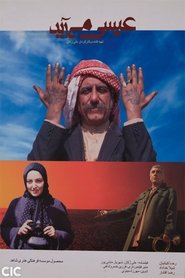
A captive warrior, Issa, who has long been thinking about various plans to escape from the camp, takes advantage of a golden opportunity and runs away from the camp immediately. A number of Ba'athist troops pursue him, but he continues steadfastly and boldly to flee while they are firing their bullets. But eventually, he manages to return to his homeland by plunging into the border river ...
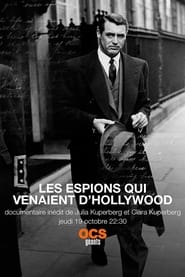
During the 1930s anti-Semitism was rampant not only in Germany but also in America. There was a German American Bund and pro-Nazi rallies even filled Madison Square Gardens in New York City. And the US was isolationist. Until Pearl Harbor, then, everything changed. Spymasters throughout the 20th century, and particularly during times of conflict, thought it advantageous to enlist the services of celebrities who had high level and powerful "fans" in various industries, many with easy access to politicians and high ranking government officials. Hollywood, as we now know from declassified National Archive documents, aided in the mobilization for war and its people contributed as spies, combatants, propagandists, documentary and fund-raisers, entertainers, and morale-boosters. Hundreds of celebrities eagerly answered the "call to arms" and brought their talents and patriotism to the intelligence services, military and war information offices.
We have detected that you are using an ad blocker. In order to view this page please disable your ad blocker or whitelist this site from your ad blocker. Thanks!