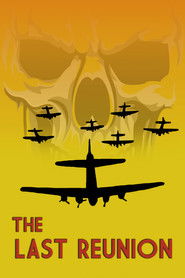
While holding their annual reunion, the former members of a Royal Air Force bomber crew begin to sense the supernatural presence of their old squadron commander, the only member of the group not to return from their last mission of the war.
Song and comedy revue, featuring Western talents, along with a theatrical troupe taking their vacation on the Lazy B Ranch run by Steve Bradley. Steve is about to enter the army and he and Tex Coulter compete for the love of Connie Grey.
A British commando team heads into France to blow up a German-held dam in preparation for D-Day, while a British agent infiltrates the German garrison to give inside help. The twist is that the British officer is replacing his twin German brother.
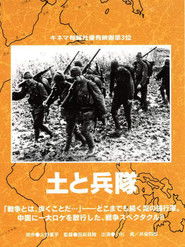
A group of Japanese soldiers land in Chinese territory. They advance on a village ; one soldier, Norimoto, is killed in the attack, but the village is captured. Norimoto’s body is recovered and buried. Over the next two days, the soldiers advance inland. Two more soldiers, Naito and Takahashi, are injured. They remain behind to recover, but vow to catch up. Their comrades march on...
Army Aviators say they fly "above the best" see the lengths these heroes will go to, to protect the soldiers on the ground, and each other during intense combat in the most dangerous places on Earth.
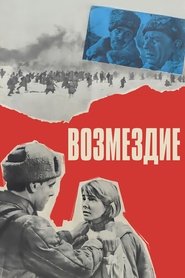
A group of Russian spies are trying to gather an important information about the German forces before the attack of the Soviet Army in this action movie set during WWII.
The chilling realities of Hitler's true intentions are exposed, to create a force that can never be beaten, a 4th Reich - The New World Order. A team of Nazi doctors and scientists were charged with generating a superior race. Their experiments and research would produce unspeakable evil and change the face of humanity forever.
A Senegalese platoon of soldiers from the French Free Army are returned from combat in France and held for a temporary time in a military encampment with barbed wire fences and guard towers in the desert. Among their numbers are Sergeant Diatta, the charismatic leader of the troop who was educated in Paris and has a French wife and child, and Pays, a Senegalese soldier left in a state of shock from the war and concentration camps and who can only speak in guttural screams and grunts.
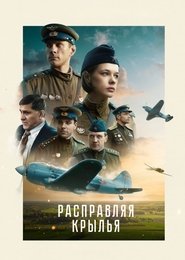
The year is 1943. Anna Petrova is a combat pilot who was seriously injured. She returned to the rear and works as a leading engineer at an aviation plant, where new Gyrfalcons aircraft are being prepared for testing. The plant's management, unaware of the consequences of her injury, instructs Anna, together with Major Zotov, to drive the prototype of the Gyrfalcon to the front. In addition to the desire to defeat the enemy and return home with a victory, Anna pursues a personal goal. She is determined to get even with Major Briggel, the German pilot who killed her lover.
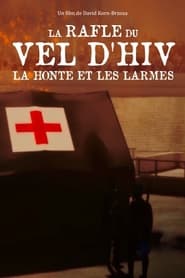
In 1942, more than 8,000 Jews were arrested on 16 and 17 July and sent to the Vélodrome d'Hiver sports center in the 15th district, a stone's throw from the Eiffel Tower, before being deported. The expression "Vel d'Hiv round-up" has become part of our collective memory, to the point of becoming the main memorial reference point for France during the dark years. Based on research carried out in unpublished or rarely explored archives, this film retraces the history of this roundup as experienced by hunted Jews and police trackers, from its planning in the Vichy offices to its hour-by-hour unfolding in the streets of Paris.
In this unique and riveting film, a troubled man has a series of dreams in which he finds himself thrown back to a time before his birth, into the Angolan Border War, as a combat soldier. There he meets his father as a young man, when he was a member of the Special Forces. As they go through combat together, the son gets to know his father in a way he never has, giving him insight and compassion, and he is able to let go of lifelong feelings of abandonment, resentment and anger. This leads to forgiveness and a real-life reconciliation, which drives home the underlying message of this film restoring the hearts of the fathers to the children and the hearts of the children to the fathers.
A Middle-Eastern country, at civil war. Amine, 10 years old, lives with his mother and infant sister in a makeshift home. Between bursts of machine gun fire, he survives. One day, tied to the foot of a carrier pigeon, he finds a tiny message scroll.
We have detected that you are using an ad blocker. In order to view this page please disable your ad blocker or whitelist this site from your ad blocker. Thanks!