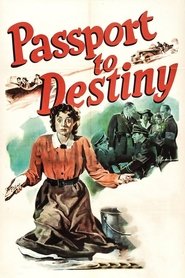
Danny La Rue stars in this 1970s drag comedy as Fred Wimbush, a Shakespearean actor who is drafted into WWII and is appearing in a camp show in France when the Nazis advance. Unless he continues in his female costume, Fred is certain to be shot as a spy. The risque gags and double entendres fly as he attempts to make his escape in the company of a troupe of Girl Guides.
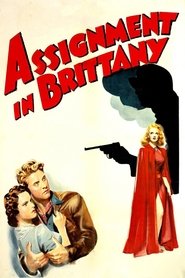
A British commando is on a one-man raid to destroy a bomb factory in Nazi-occupied France. He must enlist the aid of French farmers to complete his mission.
In Nazi-occupied Rome, a beautiful bootlegger, to the chagrin of her lover, gives sanctuary to three escaped POWs: an American pilot, a Russian sergeant and a British major.
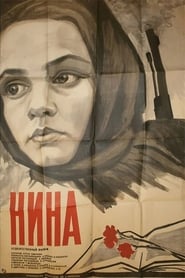
There is a war. In occupied Ukraine, the fascists fiercely suppress any centers of resistance among the civilian population, but now young people are joining the fight against the invaders. In the town of Malin, Zhytomyr Region, Nina Sosnina and her friends create an underground cell. Yesterday they were schoolchildren, and today they are carrying out subversive work, not allowing the Germans to rest. The brave Nina establishes communication with the partisans and becomes for her comrades a real Combat Commander, but now the Nazis are real hunt for them and every minute they risk their lives ...
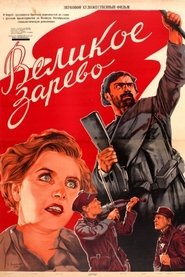
In 1917, the people of the Russian Empire are no longer willing to fight Germany, but the bourgeois government of Alexander Kerensky is unwilling to defy its imperialist allies and stop the war. Only Vladimir Lenin's Bolshevik Party is resolute in calling for peace. In the front, the soldiers of one battalion elect three delegates to travel to St. Petersburg with donations the troops collected for the Pravda newspaper: Gudushauri, Panasiuk and Ershov. The three arrive in the capital and describe the horrendous conditions in which the soldiers live to Joseph Stalin, Lenin's trusted aid and colleague. They join the Bolsheviks and take part in the storming of the Winter Palace, led by Stalin and Lenin. Stalin announces that the great dawn of revolution has broken.
Upon becoming Prince Regent, the bellicose Lord Biu of Wu sends commander-general Si Ching-wan to rage wars between the Zhao and Chen Kingdoms. A small state that is long on literary excellence but short on military might, Chen is defenceless against the invading forces. The compassionate general answers the pleading of the Chen princess, Fung-ming, to sign a treaty of peace. In his speech to the lord, Deputy General Lau Mo-yeung accuses Si of treason so as to lay claim to Chen. The lord dispatches the valiant fighter Lui Chen-sing to Chen on an assassination mission, but the assassin is vanquished. Si prevails on Lui of his patriotism. Lord Biu fights Chen. In a dire attempt to redeem Chen, Si surrenders to the Wu camp. Lui pretends to have blinded Si to extricate him. The duo ally with a band of chivalrous fighters to overturn the corrupt regime. Dispossessed of his throne, Biu commits suicide. Si returns to his land to serve as an aide to the young king and marry Fung-ming.
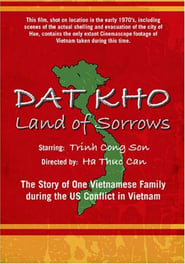
This foreign, English-subtitled film dramatizes the effect of the Vietnam War on a single South Vietnamese family, the inner conflict of decisions by each member of the family whether to remain in Vietnam or leave with the imminent advance and fall of Hue and eventual fall of Vietnam. Dat Kho, who's cast includes the beloved Vietnamese inconic anti-war songwriter/poet/artist Trinh Cong Son (1939-2001) who posthumously won the World Peace Music Award in 2004, is a story of the love of family, love of homeland, love of the culture and language of Vietnam and the ethereal love of the ingenue daughter for her fiance, foiled by the antagonistic forces of the ever-present war. A thought-provoking film.
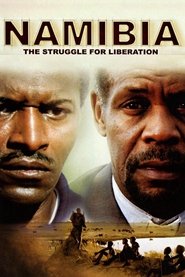
Namibia: The Struggle for Liberation is a 2007 epic film on the Namibian independence struggle against South African occupation as seen through the life of Sam Nujoma, the leader of the South-West Africa People's Organisation and the first president of the Republic of Namibia.
Seventy years on, brothers Colin and Ewan McGregor take viewers through the key moments of the Battle of Britain, when 'the few' of the RAF faced the might of the Nazi Luftwaffe. As they fly historic planes, meet the veterans, explore the tactics and technology, Colin and Ewan discover the importance of the Battle and the surviving legacy of the 1940's campaign for the modern RAF.
A Union soldier flees from battle and is rescued unexpectedly by free Black man Kitch and his friends. Risking everything, Kitch takes William deep into the woods to the safety of his adopted home. It's here that William discovers Kitch is a part of secret community of freed slaves, who run a portion of the Underground Railroad. When a ruthless and desperate slave catcher discovers the underground network, he conspires to bring it burning down to the ground.
When war breaks out between the Song and Liao armies, the wizard of Liao sets up an unbreakable barrier to defeat the Song forces. With General Mu Guiying's arrival, the Song army's hope renews.
A group of German boys is ordered to protect a small bridge in their home village during the waning months of the second world war. Truckloads of defeated, cynical Wehrmacht soldiers flee the approaching American troops, but the boys, full of enthusiasm for the "blood and honor" Nazi ideology, stay to defend the useless bridge.
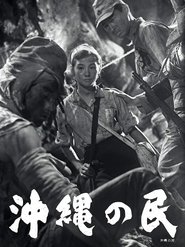
With the background of the Battle of Okinawa, he draws a semi-documentary image of each individual person under an unusual psychological state of war. Furukawa Takumi of “Backlight” is adapted and directed by Daiichi Ishino. Filmed by Yoshio Mamiya, “Smuggling of the body”. The main performers are Sachiko Sakai since the “Zoi Family”, Hiroyuki Nagato of the “Next door bride”, Shoji Yasui of the “Sentimental wife”, Takatoko of “Crying, the last Japanese fighter”, “Blue angry” Noriko Katsura, Shinzo three of "actress (1956)", Masao Oda, Nobuo Kaneko, Toru Abe, Hiroshi Nihonyanagi, Misako Tsubouchi.
We have detected that you are using an ad blocker. In order to view this page please disable your ad blocker or whitelist this site from your ad blocker. Thanks!