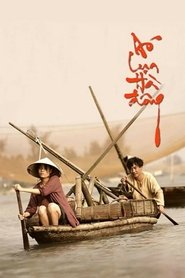
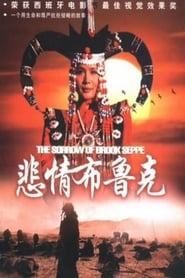
A family living in poverty faces financial difficulties while striving to educate their daughters. The mother resorts to extraordinary measures to procure the traditional silk dresses needed for her kids to attend school.
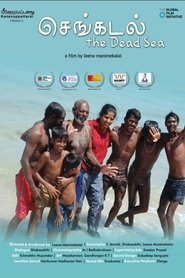
Dhanushkodi, the Indo-Sri Lankan border town, is the crucible wherein History is brewing this concoction of defeated lives and exhausted dreams. Manimekalai, the filmmaker, Soori, a half-wit Sri Lankan Tamil Refugee, Munusamy, the fisherman, Rosemary, the social worker in Jesuit Christian Refugee Services, try hard to retain their sanity in this mad jumble. Their interactions with the dead or living refugees, their skirmishes with the Indian and Sri Lankan States, their personal lives overrun by external events - form the kernel of this narration.
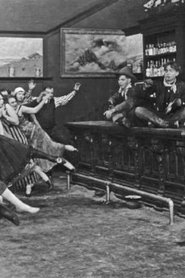
During World War I, westerner Cheyenne Harry is a horse seller, but he refuses to part with his favorite horse and friend, Cactus. One night, broke and drunk, he sells Cactus to an Englishman for $350 which he soon loses gambling. When Harry discovers that Cactus is being sent to the war in France and probable death, he gets a horse- tending job on the ship. When they get the opportunity Harry jumps off the ship with Cactus and they swim to shore. Harry is eventually caught but is allowed to work off his debt and keep Cactus.
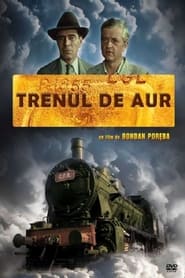
First days of September 1939. The government decides to transport the Polish gold stored in the treasury of the National Bank of Poland out of the threatened Warsaw. A convoy is formed under the command of the man for special tasks, Major Bobruk. A string of trucks and city buses travel along crowded roads under relentless attack by aircraft. The convoy makes its way through Lublin to Romanian territory, where the gold will be reloaded onto a train. Prime Minister Calinescu, disregarding the threats of the Nazis, agrees to the transit of the precious bullion through his country. The evacuation of the gold is threatened all the time by a special German sabotage group under the command of Second Lieutenant Rudolf Lang.
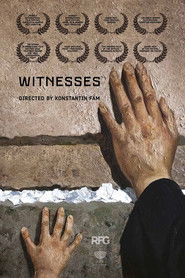
An anthology film about the common topic of the Holocaust and honouring the memory of the victims. What caused the mass extermination of people on a national basis? Where do origins of interethnic intolerance, anti-Semitism, nationalist propaganda come from? Today these issues are still topical. Nationally motivated conflicts still fare up between people; national hostility is still kindled. There are voices that deny the reality of the Holocaust as a historical fact. We cannot allow a repetition of the monstrous tragedy and should never forget about it!
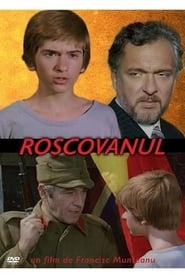
During the summer of 1944, while Romanians turn weapons against Nazis, Mihai, an orphan teenager whose parents died in a bombing, tries to enlist in order to fight in the front line but he discovers that former police commissioner Potra tortured and beaten prisoners, including his father, who was political detained. Mihai will fight to bring Potra in front of the justice.
Set during the war between Dutch/Allied troops and the people of Cibening Cakung in 1945, the story begins when a young man captures 22 Indian soldiers and four British crew members who land on Rawa Gatel. Based on real events, the factual protagonists are KH Noer Ali, leader of Laskar Hizbullah, who is also an ulama (religious leader) who founded the Islamic boarding school; Luke Kustaryo from the Indonesian People's Army; Bang Jole, a local fighter; and Hussein Kamali, an intellectual. Among the fictional characters are H Komar and his wife, who are executed by the Dutch, in front of their children. Then there are also Mahfud and Hafid, members of Hizbullah, who are opponents but who reconcile when they are about to die.
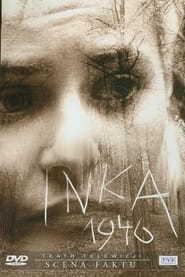
Theatrical Inka - Danuta Siedzikówna - survived the death of her mother, who was murdered by the Gestapo in Bialystok in 1943. Her father died in Tehran after leaving a Soviet gulag. The orphaned sisters, Inka and her siblings, were raised by their grandmother. The heroine was an AK nurse. She was sentenced to death for joining the unit of Major Szendzielarz alias Łupaszko, which was subordinate to the legal authorities of the Republic of Poland in exile. The judges relied on false testimony from militiamen, which, by the way, did not fully incriminate her. In a secret message to her grandmother, Siedzikówna wrote: "Tell my grandmother that I behaved as I should."
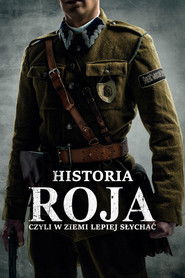
In the spring of 1945, the commanding officer of the National Armed Forces in Mazowsze and older brother of 20-year-old Mieczyslaw Dziemieszkiewicz, is assassinated by Soviet soldiers. Mieczyslaw then joins the National Military Union. He becomes the commander of a partisan unit fighting for the next six years to free Poland from Soviet tyranny by terrorizing the UB and its collaborators. Communist authorities will do whatever it takes to track down the "enemy of the people's power."
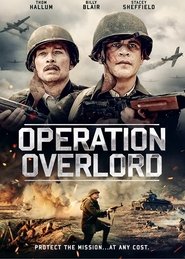
A week before storming the beaches of Normandy, two US Soldiers infiltrate an abandoned complex to rescue a prisoner of war from the clutches of the Nazi regime.
A second episode in the trilogy about the partisans fighting against the Nazis during the WWII on the territory of Russia. Film is set in the winter of 1943-1944. Major Mlynsky is the commander of the partisan group, that is fighting behind the Nazi's front-lines. Major Mlynsky is invited to the Chief of Staff, where he is promoted to Lt.-Colonel for his courage. Now Mlynsky is in charge of the new partisan's operation.
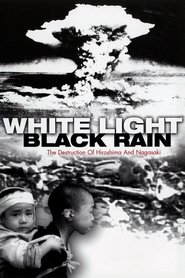
Steven Okazaki presents a deeply moving look at the painful legacy of the first -- and hopefully last -- uses of nuclear weapons in war. Featuring interviews with fourteen atomic bomb survivors - many who have never spoken publicly before - and four Americans intimately involved in the bombings, White Light/Black Rain provides a detailed exploration of the bombings and their aftermath.
We have detected that you are using an ad blocker. In order to view this page please disable your ad blocker or whitelist this site from your ad blocker. Thanks!