At the end of the 19th century, somewhere in the outskirts of the Russian Empire, a doctor administers a lethal overdose of ether to a young woman – the object of his desire. After getting away with his crime, he finds employment in a fortress, where he continues his experiments with ether to manage pain and manipulate human behaviour. Despite his evilness, it is not too late for his soul to be saved from eternal damnation…
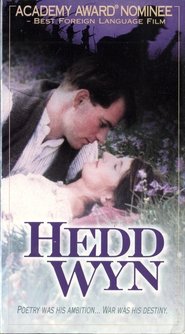
'Hedd Wyn' is a 1992 Welsh anti-war biopic. Ellis Humphrey Evans, a farmer's son and poet living at Trawsfynydd in the Meirionydd countryside of upland Wales, competes for the most coveted prize of all in Welsh Poetry - that of the chair of the National Eisteddfod, which in August 1917 was due to be held in Birkenhead (one of the rare occasions when it was held in England). After submitting his entry, under his bardic name "Hedd Wyn" ("Blessed Peace") Evans later departs from Meirionydd by train to join the Royal Welsh Fusiliers in Liverpool, despite his initial misgivings about the war. Ellis is sent to fight in the trenches of Flanders. 'Hedd Wyn' was the first Welsh-language film to be nominated for an Oscar.
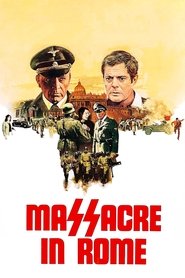
In the Nazi occupied city of Rome, an assault on an SS brigade draws retaliation from the military governship. "Massacre in Rome" is the true story of how this partisan attack led to the mass execution of Italian nationals under the orders of SS-Lieutenant Colonel Kappler.
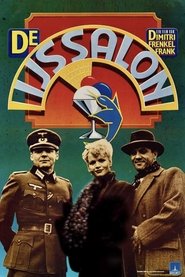
Otto, a Jewish refugee who managed to escape from Berlin in the early days of WW2, is now the owner of an Amsterdam ice cream parlor. Otto's place soon becomes a microcosm of the city with its German invaders, Dutch collaborators and anti-fascist resistance groups.
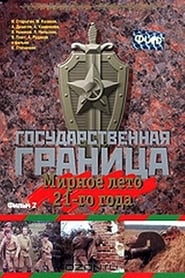
Germany, Baltic Sea coast, May 1945, a few days before the end of World War II. A small Soviet patrol arrives at an isolated house where an elderly baroness gives shelter to a group of orphan girls and a boy who is determined to continue the fight.
Captain Bob Hayworth, his brother Lieutenant Gilroy Hayworth and Captain Derek Marbury are in a World-War 1 trench on the front-lines in France. Bob Hayworth resents Marbury greatly as the latter had married the girl, Lucy Neville, Marbury was courting in pre-war London. Ordered to go on a night patrol, the cowardly Gilroy committed suicide rather than face his fear. Bob and Derek arrange it to appear that Bob had been killed by a shell-burst, and Derek, with his face camouflaged, takes the patrol posing as Gilroy. While on patrol, Derek is hit by a shell-burst and found by the German Red Cross, who turn him over to a family of French peasants.
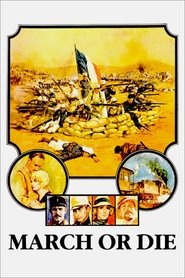
Just after World War I, Major Foster is incorporating new recruits into his French Foreign Legion platoon when he is sent to his former remote outpost located in the French Morocco to protect an archaeological excavation from El Krim, a Rifian leader who intends to unite all local tribes to fight the colonial government…
During the Japanese occupation in World War 2, a soldier was tasked by a ranking officer to go undercover and be a government official, but under Japanese governance to gain their trust and collect intel.
Zeitgeist: Addendum premiered at the 5th Annual Artivist Film Festival. Director Peter Joseph stated: "The failure of our world to resolve the issues of war, poverty, and corruption, rests within a gross ignorance about what guides human behavior to begin with. It address the true source of the instability in our society, while offering the only fundamental, long-term solution."
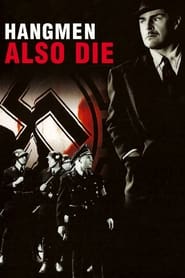
During the Nazi occupation of Czechoslovakia, surgeon Dr. Franticek Svoboda, a Czech patriot, assassinates the brutal "Hangman of Europe", Reichsprotektor Reinhard Heydrich, and is wounded in the process. In his attempt to escape, he is helped by history professor Stephen Novotny and his daughter Mascha.
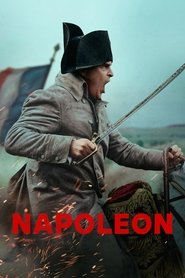
An epic that details the checkered rise and fall of French Emperor Napoleon Bonaparte and his relentless journey to power through the prism of his addictive, volatile relationship with his wife, Josephine.
The film tells the story of the legendary 'Shadhin Bangla Football Team' founded during the 1971 Liberation War of Bangladesh. They played friendly matches across India to raise funds which would be used in the war. The film also portrays the personal lives of few players of the team and their struggle and losses during the war. Though the film is inspired by true events, it takes cinematic liberty and mixes fiction with reality as well.
We have detected that you are using an ad blocker. In order to view this page please disable your ad blocker or whitelist this site from your ad blocker. Thanks!