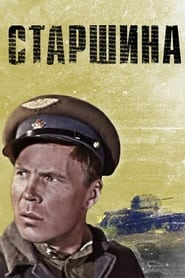
After leaving the hospital, Sergeant Katsuba, who has bid farewell to frontline service, travels to a provincial town to teach military science to cadets. However, his relationship with the 17-year-old boys does not go well: they consider their instructor to be unfair and overly critical...
During the Nazi era, a Jewish woman on the run takes a trolley which passes near the Warsaw ghetto, where the uprising battle is taking place, and some passengers are struck by stray bullets. They take temporary refuge in an empty building, and there she has a chance meeting with her ex-fiancé. He offers to put her up--that is, hide her--for a few days. He's now married, a professional who lives in an idyllic suburb reached by a trolley that runs through the woods. His wife seems more committed to putting up the fugitive than he is. The story involves the neighbors, the building owner who avoids involvement and seeks solace in classic poetry, and the super and his suspicious wife.
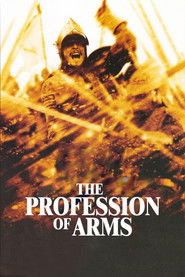
In autumn of 1526, the Emperor, Charles V, sends his German landsknechts led by Georg von Frundsberg to march towards Rome. The inferior papal armies, commanded by Giovanni de'Medici, try to chase them in the midst of a harsh winter. Nevertheless, the Imperial armies manage to cross the rivers along their march and get cannons thanks to the maneuvers of its Lords. In a skirmish, Giovanni de'Medici is wounded in the leg by a falconet shot. The attempts to cure him fail and he dies. The Imperial armies assault Rome. The film is beautifully but unassumingly set, and shows the hard conditions in which war is waged and its lack of glory. It ends straightforwardly with the declaration made after the death of Giovanni de'Medici by the commanders of the armies in Europe of not using again fire weapons because of their cruelty.
Australian newsreel, telling of the besieged Australian forces in Tobruk. Coverage shows dawn patrols, wrecks in Tobruk Harbour, tank patrols, anti-aircraft action against German planes, gun barrages, etc. also seen is the grave of first Australian VC (Victoria Cross) Corporal Edmondson and his mother at home holding the award.
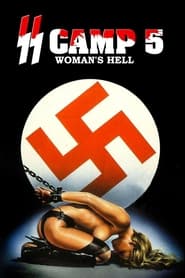
During the last days of WW2, several female prisoners arrive at Camp 5 to work as sex slaves for officers and guinea pigs for horrific experiments by Nazi doctors who are trying to find a cure for burns. But these women are not going to die without a fight... Can they stay alive until the closing Red army comes to their rescue?
The core of the plot is the romantic triangle formed by the protagonist, a conscripted soldier named Private Brigg, a worldly professional soldier named Sergeant Driscoll, and Phillipa Raskin, the daughter of the Regimental Sergeant Major. The location is a British army base in Singapore during the Malayan Emergency.
Stephen Stephani leaves Nordhoff with his daughter Mary to visit Zandria, an enemy country, where he tries to steal the war plans of the hostile nation. There, Mary meets Paul Ekald, a Zandrian captain, falling in love with him at first sight. While Mary remains in Zandria for the moment, Stephani returns to Nordhoff. Meanwhile, Vesta, Mary's illegitimate half-sister, has managed to get hold of important war plans stolen from Count Wenzel. But, to get them, she had to kill the count.
Javier, a 19-year-old young man drafted into the war, goes to his ex-girlfriend's house seeking forgiveness before he leaves. At the same time, Javier's mother, Alicia, visits an old friend who is now a colonel to ask her to spare him.
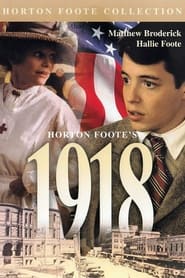
It's 1918, the height of United States involvement in World War I - Liberty Bonds are sold, German immigrants are suspected as traitors or saboteurs, young men everywhere succumb to the patriotism and propaganda and enlist. In a small Texas town, Horace Robedaux feels the pressure - he doesn't want to leave his young wife Elizabeth and their young child Jenny - but Elizabeth's can't-do-anything-right little brother is constantly talking about the war, and Elizabeth's stern father, who opposed the marriage initially, now has plans to take care of his daughter and the child so Horace can fight for his country. However, the influenza epidemic sweeping the town (and the nation) may change everyone's plans.
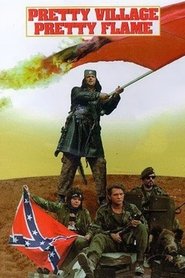
An indigenous clan-based people living in harmony with nature find their way of life threatened when violent interlopers from another culture arrive, intent on seizing their natural resources and enslaving them.
“The Vanished” was a full-length feature film produced nearly twenty years ago by the IDF Spokesperson’s Film Unit. It was an exceptionally ambitious and elaborate production, with an estimated budget of around one million dollars. The IDF invested generous resources—hundreds of extras, tanks, helicopters, and more were made available—and some of Israel’s top film professionals joined (or were enlisted) to take part in its creation. Nevertheless, at the very last moment, the IDF decided to shelve the film. “The Vanished” was never publicly screened, and to this day, the reason for its suppression remains unclear.
WWII, 1945. There are fights for the city on the Danube. The river is mined by the Germans, and this fetters the action of our troops. In addition, a city with a million people was left without food. And downstream are Soviet food barges. The command instructs the reconnaissance group a difficult and dangerous operation — to obtain from the enemy a map of the mined sections of the river, which requires penetrating into the city captured by the Germans.
Imagining the unimaginable through the eyes of Wilfred Owen, combining reconstructions of Owen’s war experiences with animation and readings from his poems and letters.
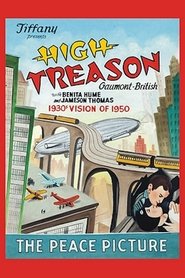
The year is 1940 and tension is growing between the empires of United Europe and the Atlantic States. A bloody border incident puts both sides on high alert.
We have detected that you are using an ad blocker. In order to view this page please disable your ad blocker or whitelist this site from your ad blocker. Thanks!