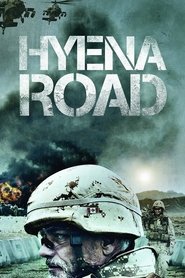
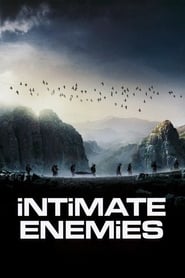
Three different men, three different worlds, three different wars – all stand at the intersection of modern warfare – a murky world of fluid morality where all is not as it seems. A unique and dramatic look at the Canadian Army in Afghanistan.
Diogo is a cartographer and artist who is encharged to set the new frontiers of Portuguese Colonies in South America. When he reaches the center of the continent, finds apparently nothing but wilderness and ‘uncivilized’ natives with strange ways of living. But Captain Pedro, the rude scout who guides him through the jungle, involves Diogo in an involuntary act of violence which will tie him in an unusual way to that far away country. At the same time, the Portuguese colonists are trying to make peace with Guaicuru Indians (one of the few natives with horse-riding abilities). But peace doesn’t ever have a low price.
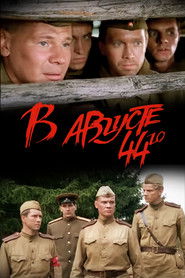
The movie is set in Belarus, where a team of counter-intelligence officers is given only three days to find a German radio operator posing as a Soviet soldier, behind soviet lines, on the eve of a major offensive.
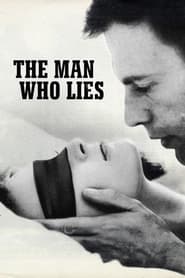
A man may or may not have betrayed a resistance fighter during World War II. He has supposedly been shot down by the Nazis and wanders into town. Mourning the death of an unseen comrade, he is taken in by the family of the dead rebel. He engages in a superfluous affair and witnesses the lesbian relationship between the man's sister and a female servant. When passions subside, the family has doubts about the reliability of the man's story.
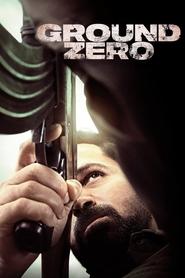
November 1980. Southern Iran. We are at the beginning of the Iran-Iraq war. Abadan, the capital of the Iranian petrol industry resists the repeated assaults of the Iraqi army, but is soon under full siege. Omid, a 14-year-old boy, has stayed back in the city, with his grandfather, waiting for his elder brother to come back from the frontline. Along with Omid, we discover several other uncommon characters, each one having stayed for a personal reason. Each one resisting in his own way. But as the Iraqi siege of the city hardens, Omid has to quickly find a way to save those he loves.
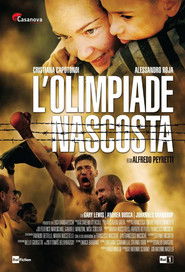
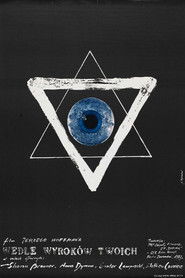
In a German concentration camp in occupied Poland, a group of prisoners prepared a symbolic Olympic Games. The German Nazis discovered their plans and agree to face them in competitions to prove their racial superiority.
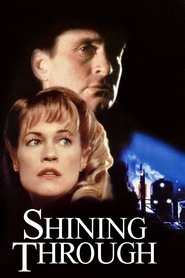
Spirited New Yorker Linda Voss goes to work for international lawyer and secret Office of Strategic Services operative Ed Leland just before World War II. As they fall in love, the United States enters the fight against Hitler, and Linda volunteers to work for Ed spying undercover behind Nazi lines. Assigned to uncover information about a German bomb, Linda also has personal motives to fulfill: discovering the fate of her Jewish family members in Berlin.
The story unfolds in a cursed mine, where Japanese soldiers and their captives find themselves trapped. As tensions between enemies reach a breaking point, they are forced to confront a terrifying, ancient monster lurking in the shadows.
As the Germans invade Poland Jewish Ruth and her mother are trapped by the oncoming Nazis. When they are loaded onto a truck for transportation to a ghetto, Ruth is told by her mother to jump from the truck at the first chance and to make her way to relatives in Warsaw. While the war progresses Ruth tries to survive and grow up.
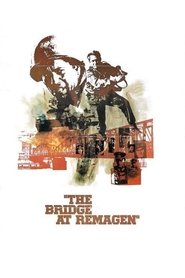
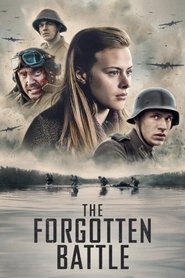
In March of 1945, as the War in Europe is coming to a close, fighting erupts between German and American troops at the last remaining bridgehead across the Rhine.
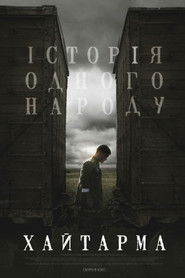
The film tells about the tragic date in the history of the Crimean Tatar people — May 18, 1944 — Stalin’s deportation of the Crimean Tatars. The plot of the film — a pilot, twice Hero of the Soviet Union, Amethan Sultan. In May, 1944, a year after liberation of Sevastopol Amethan goes on vacation to his native town Alupka. On May 18 his eyes witness begining of deportation of the Crimean Tatars.
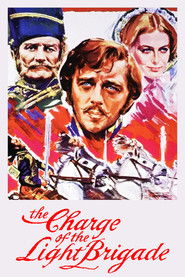
During the Crimean War between Britain and Russia in the 1850s, a British cavalry division, led by the overbearing Lord Cardigan, engages in an infamously reckless strategic debacle against a Russian artillery battery.
Few writers today tackle sweeping, multigenerational family sagas, work that demands vast life experience and insight. József Attila Prize–winner Árpád Thiery has done just that: his two published volumes of the Freytág Siblings’ story (1943 through the late 1960s) have been adapted by Hungarian Television into a five-part series slated for January 1989, and he’s already completed the trilogy’s final installment. Thiery describes it as a historical family novel, tracing postwar Hungary, from the Stalinist 1950s and the 1956 uprising’s aftermath to the upheavals of 1968, while celebrating freedom, truth, hope, boundless faith and innocent responsibility.
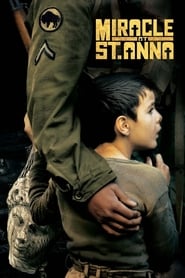
Miracle at St. Anna chronicles the story of four American soldiers who are members of the all-black 92nd "Buffalo Soldier" Division stationed in Tuscany, Italy during World War II.
We have detected that you are using an ad blocker. In order to view this page please disable your ad blocker or whitelist this site from your ad blocker. Thanks!