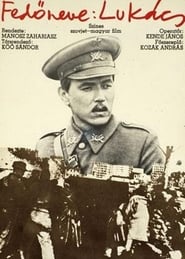
Bela Frankl, a young Hungarian, is taken prisoner by Russia during the First World War, defects to the side of the revolution and some time later, under the pseudonym Mate Zalka, becomes a famous Soviet writer. In 1936, having arrived as a volunteer in Spain, he becomes General Lukacs, forms the 12th International Brigade of non-professional fighters and takes the first heavy battles with Franco's cadre formations...
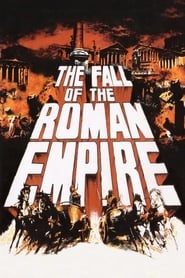
In the year 180 A.D. Germanic tribes are about to invade the Roman empire from the north. In the midst of this crisis ailing emperor Marcus Aurelius has to make a decision about his successor between his son Commodus, who is obsessed by power, and the loyal general Gaius Livius.
Alain Lefevre is a boxer paid by a Marseille mobster to take a dive. When he wins the fight he attempts to flee to America with the mobster's girlfriend Katrina. This plan fails and he seeks escape by joining the foreign legion. As part of the legion he tangles with abusive lieutenant Steinkampf and bonds with legionnaires Luther, Mackintosh and Rosetti.
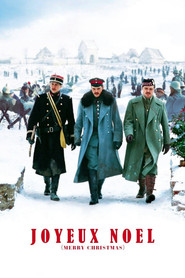
France, 1914, during World War I. On Christmas Eve, an extraordinary event takes place in the bloody no man's land that the French and the Scots dispute with the Germans…
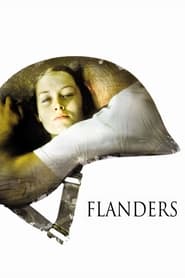
André Demester secretly and painfully loves Barbe, his childhood friend, accepting from her the little that she gives him. He leaves home to be a soldier in a war in a far off land. Barbarity, camaraderie and fear turn him into a warrior. As the seasons go by, Barbe, alone and wasting away, waits for the soldiers to return. Will Demester’s boundless love for Barbe save him?
Merit, a U.S. Army veteran suffering from PTSD, is repeatedly tortured by visions of her deceased friend and company buddy Zoe. After her Afghanistan service in 2016, she attends group therapy until Dale, her grandfather and former Lieutenant Colonel, is recently diagnosed with Alzheimer's. Merit steps up to his aide, and discovers more about herself and her family, while also gaining the courage to put her metaphorical demons to rest.
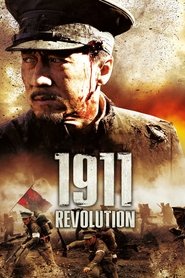
China's first President Sun Yat-Sen and military commander Huang Xing lead the revolutionary Wuchang Uprising in a bid to put an end to the reign of the Qing Dynasty.
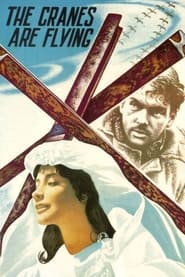
Veronika and Boris come together in Moscow shortly before World War II. Walking along the river, they watch cranes fly overhead, and promise to rendezvous before Boris leaves to fight. Boris misses the meeting and is off to the front lines, while Veronika waits patiently, sending letters faithfully. After her house is bombed, Veronika moves in with Boris' family, into the company of a cousin with his own intentions.
1956. Stefan Madejski, a former KBW lieutenant, is released from prison and rehabilitated. Ten years ago he fought against the gangs, but his brutal and ruthless methods aroused opposition. Because he let go of a band member, his former AK unit colleague, he was brought before a military court and sentenced to fifteen years. Now he is trying to find the people who put him in prison. These encounters give him nothing but bitterness.
Pierre is a Montreal photojournalist who returns from Nicaragua to find that his ten-year menage a trois is over. Haunted by his mid-life crisis, he becomes obsessed with trying to find out why his two lovers, Sarah and David, have left him.
Stationed in a secluded Bulgarian village in 1943, Walter – a German Wehrmacht sergeant and artist – lives in almost idyllic distance from the war. Then a transit camp is set up for Jews arriving from Greece. When Ruth, one of the internees, asks Walter to help a pregnant woman, the two form an unlikely bond.
Inexperienced Thai soldiers battle a growing undead menace in this gruesome survival horror. A Japanese military experiment that turns men into monsters escapes containment, it’s up to these troops to save their nation from annihilation.
At the very end of the WW2, two Croatian Home Guard soldiers run home in German uniforms. They managed to save their lives and spent most of their time stealing chickens and eggs for their superior officer. Their uncertain journey ends with the last task: to escort the arrested partisan agent.
An American soldier sent to Vietnam goes AWOL and returns to his hometown. His parents turn him over to military authorities. He is court-martialled and sent to the toughest military prison...
“Çanakkale is Impassable” is the first and longest cartoon made about the Çanakkale War and has the distinction of being the first war cartoon in Turkey. It is also the first cartoon in which the most figures, ship models and special effects were used and Mustafa Kemal Atatürk and other important figures were drawn using animation techniques.
A psychological study of a hero who, after being badly beaten up by Gestapo, rats on his comrades and friends and becomes their vicious killer. Now the death seems like a salvation to him.
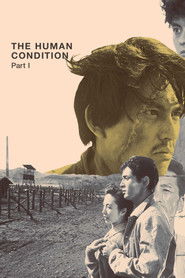
After handing in a report on the treatment of Chinese colonial labor, Kaji is offered the post of labor chief at a large mining operation in Manchuria, which also grants him exemption from military service. He accepts, and moves to Manchuria with his newly-wed wife Michiko, but when he tries to put his ideas of more humane treatment into practice, he finds himself at odds with scheming officials, cruel foremen, and the military police.
We have detected that you are using an ad blocker. In order to view this page please disable your ad blocker or whitelist this site from your ad blocker. Thanks!