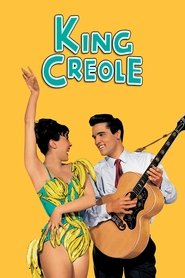
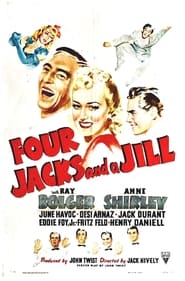
Danny Fisher, young delinquent, flunks out of high school. He quits his job as a busboy in a nightclub, and one night he gets the chance to perform. Success is imminent and the local crime boss Maxie Fields wants to hire him to perform at his night club The Blue Shade. Danny refuses, but Fields won't take no for an answer.
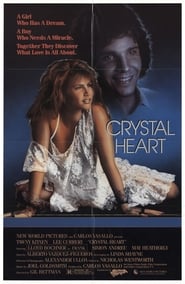
A young composer, Kenny Kew, is tasked to bring his niece to her father, Lee, when his sister passed away. With Lee away with his roving rock band, Kenny sets off on a reluctant road trip with his niece in search of her elusive father. Kenny, who initially wanted to sever all ties with his family, eventually realises the importance of family on this journey of self-discovery.
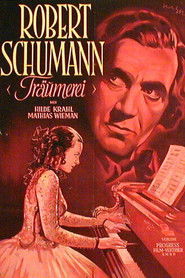
A musical film based on biographical facts about Clara Wieck's love for composer Robert Schumann (1810-1856), her marriage against her will, Schumann's triumph, and his tragic end due to mental illness. The film is beautiful and entertaining, full of noble spirit and beautiful words about art and love, which only conflict in a theoretical context; not least thanks to its solid cast, this film is quite serious and far from kitsch. Completed in 1944, during World War II, the film was rejected by the Nazi leadership, but was eventually released and enjoyed success with an audience already weary of war.
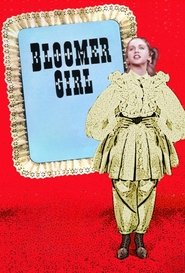
In 1956, BLOOMER GIRL was presented in a live television production starring the magnificent Barbara Cook, whose star was then on the rise, with leading roles in CANDIDE and THE MUSIC MAN still in her future. A solid success when it opened on Broadway in 1944, BLOOMER GIRL boasts a glorious score by the legendary team of Harold Arlen and E.Y. Harburg (THE WIZARD OF OZ). The book by Fred Saidy is set at the brink of the Civil War and addresses issues of women's equality (priorities were the right to vote and to wear bloomers, a liberating alternative to hoop skirts) and racial equality.
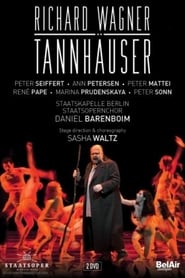
A brand new production of ‘’Tannhäuser’’ at the Staatsoper Berlin conducted by Daniel Barenboim, staged and choreographed by Sasha Waltz, who has already staged Purcell and Berlioz, Dusapin, Rihm and Hosokawa. Now Sasha Waltz brings to the stage a grand romantic Wagner’s opera with a star cast of some of today best Wagnerian singers: Peter Seiffert in the title role, Réne Pape as Landgraf and Peter Mattei as Wolfram, Ann Petersen sings Elisabeth and Marina Prudenskaya is Venus.
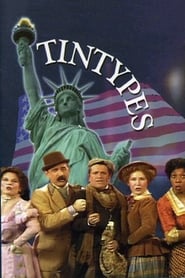
Debuting on Broadway in 1980, Tintypes is a musical review featuring songs from the early twentieth century providing the audience with a look into that turbulent time in American history. Nominated for three Tony Awards, and winner of several Obie Awards, this production stars Carolyn Mignini, Lynne Thigpen, Trey Wilson, Mary Catherine Wright, and Jerry Zaks.
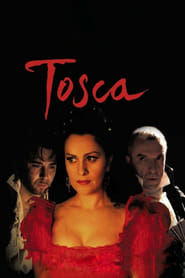
Benoit Jacquot's acclaimed 2002 film of Puccini's opera stars Angela Gheorghiu in the title role, with Roberto Alagna, Ruggero Raimondi and the Chorus and Orchestra of the Royal Opera House, Covent Garden, under Antonio Pappano.
The setting is Hotel Edler, a long-established four-star hotel in Vienna. Josi Edler, the heir to the family-owned hotel, has been actively involved in the hotel's management and seeks to reform the hotel to make it fit with the times, as opposed to his parents who lean towards tradition and formality. Today, Hotel Edler is preparing for the reception of a coming guest: Emma Carter, the famous Austrian-born Hollywood star, who will stay at the hotel incognito. Unfortunately, a hotel employee has already revealed the top-secret news of Emma’s arrival through social media, and it causes chaos at the hotel...
Teenage groupie Dorothy rides with a small-time rock band when, suddenly, the van runs off the road, and she hits her head. She awakes in a fantasy world as gritty and realistic as her own and learns that her arrival killed a young thug. A gay clothier, Glyn the Good Fairy, gifts her a pair of red heels as a reward to help her see the last concert of the Wizard, an androgynous glam rocker. As she's pursued by the late thug's lecherous brother, she befriends a brainless surfer, a heartless mechanic, and a cowardly biker.
This is Poe and Král's first effort, shot on small-gauge stock, before their more well-known endeavor The Blank Generation (1976) came to be. A "DIY" portrait of the New York music scene, the film is a patchwork of footage of numerous rock acts performing live, at venues like Madison Square Garden, Radio City Music Hall, the dive bars of Greenwich Village and, of course, CBGB.
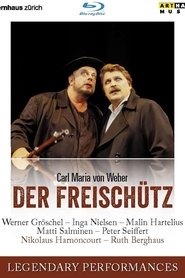
The legendary director Ruth Berghaus created this staging of Carl Maria von Weber’s Der Freischütz as a gripping theatrical experience for the Zurich Opera in 1993. Its revival in 1999 was a roaring success. With sets by Hartmut Meyer and costumes by Marie-Louise Strandt, Berghaus’ staging avoids the local peasant colour conventionally associated with Weber’s opera. Chorus and orchestra of the Zurich Opera House are conducted by Nikolaus Harnoncourt, universally celebrated for the structural transparency of his interpretations, his intellectual penetration and his emotional understanding of both music and opera plot. And last but not least an all-star cast made this production a highly memorable event: the dramatic soprano Inga Nielsen as Agathe, one of her best roles, the Swedish soprano Malin Hartelius as Ännchen, the sought-after Heldentenor Peter Seiffert, who gives a convincing passionate Max, and many others.
Karanina "Nina" Novak, is befriended by Nifty, the leader of a four-piece orchestra, and in return, secures an engagement for them at the Little Aregal Cafe, with herself as the vocalist, by pretending she once knew the King or Aregal back in the old country. Steve shows up pretending to be the King of Aregal, and complicates the growing romance between Nina and Nifty. When Steve runs off with Opa, the real King of Aregal (also Steve) appears and complicates things again.
We have detected that you are using an ad blocker. In order to view this page please disable your ad blocker or whitelist this site from your ad blocker. Thanks!