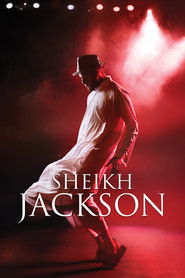
The sudden death of Michael Jackson sends a former King of Pop devotee — now a young imam — into a tailspin, in this tender and comedic film from Egyptian filmmaker Amr Salama.
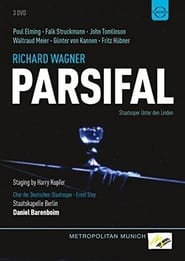
This dramatic production by the brilliant German stage director Harry Kupfer marked Daniel Barenboim's appointment as the artistic director of the Berlin State Opera in 1992. The cast is made up of the finest Wagnerian singers of the period, all of whom enjoyed substantial international careers. Barenboim's superb conducting reveals Wagner's multi-layered score in all it's glory.
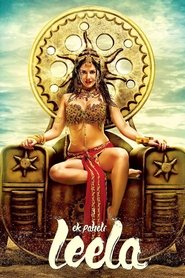
It is a reincarnation story about the love between Leela and her lover, which is left incomplete because one of them has been murdered. The story comes to circle after 300 years; when Leela has taken birth as Meera and her lover's character is also reborn.
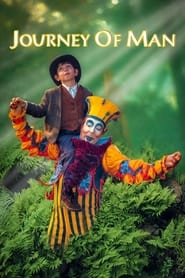
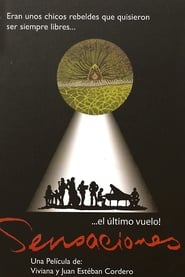
A child is born. We see underwater swimmers representing this. He is young, in a jungle setting, with two fanciful "instincts" guiding him as swooping bird-like acrobats initially menace, then delight. As an adolescent, he enters a desert, where a man spins a large cube of metal tubing. He leaves his instinct-guides behind, and enters a garden where two statues dance in a pond. As he watches their sensual acrobatics of love, he becomes a man. He is offered wealth (represented by a golden hat) by a devil figure. In a richly decorated room, a scruffy troupe of a dozen acrobats and a little girl reawaken the old man's youthful nature and love.
Hope (Stephanie Mello) believes she has found her dream job working for Wish Inc., a corporation that grants wishes led by The Wish Master (Bivas Biswas). However, she soon finds out that the job is not as she had expected. Can Hope still make a difference?
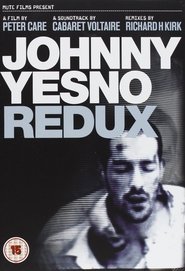
Johnny YesNo – Redux reunites Cabaret Voltaire and Peter Care almost 30 years later with a completely new cast, a relocation to LA and an entirely new soundtrack remixed by Richard H. Kirk, the film has lost none of its hallucinatory power. The short goes deep into the structure of Peter Care’s original film and the Cabaret Voltaire tracks used in connection with it. What emerges is as much a juxtaposition of times and places as sights and sounds. The tale changes in the retelling, but that change now seems to be taking place on a molecular level. Richard H Kirk has reconfigured the film’s soundtrack, giving the proceedings an ominous sense of something slowly sliding into view from afar, glimpsed out of the corner of the eye.
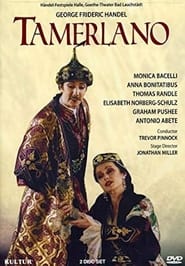
Handel's 1724 opera Tamerlano followed the success of his previous year's Giulio Cesare with another colourful historical costume drama. This time the setting is the court of "Timur the Tartar", who has just defeated the Turkish Sultan Bajazet at the battle of Angora. There are, naturally enough, romantic complications when both Tamerlano and his ally, the Greek Prince Andronico, fall in love with Bajazet's daughter Asteria. She, however, has plans to revenge her father's defeat.
This production was directed by Jonathan Miller and staged in the intimate surroundings of the Goethe Theatre of Bad Lauchstadt as part of the 2001 Halle Handel Festival.
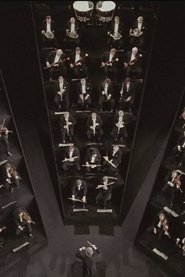
A concert-film using innovative cinematic techniques to set music to images. As conductor Herbert von Karajan didn't like the experimental style, he had the film re-edited severely before release.
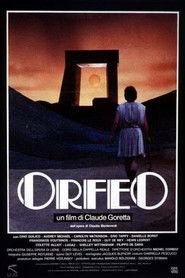
Claude Goretta brings to life the age-old tale of Orpheus and Eurydice in a fresh adaptation of Monteverdi’s Orfeo. Monteverdi’s fabled opera Orfeo was long described as the first opera to have been written. Although modern scholarship has proven this to be untrue, the work remains one of the pillars of western music history, a musical creation which laid the foundations for much of what was to come. As musicologist Jack Westrup explains, Orfeo marked a major milestone not because it broke new ground, but because imagination had taken precedence over theory. While Monteverdi may not have been a revolutionary, his music represents the culmination of centuries of musical evolution, and shows him as the clear master of both polyphony and monody.
Organized by Paul McCartney and the United Nations, these concerts were in response to the 1975-79 Khmer Rouge’s reign, where three million persons perished in Cambodia. During the concerts, McCartney brought three generations of popular musicians together. The older generation included McCartney and the Wings, The Who and members of Procol Harum. The middle generation was represented by Queen and members of Led Zeppelin. Most notably, there was the new generation of mainly New Wavers and Punk Rockers, such as The Pretenders, Elvis Costello and The Attractions, Ian Dury and the Blockheads, The Clash, and The Specials.
Jack White and T Bone Burnett invite today’s greatest artists to test their skills against the long-lost machine that recorded their musical idols and forebears. The producers have, over a decade rebuilt, a 1920s recording system, timed by a weight-driven system of clockwork gears. Stripped of the comforts and security of modern technology, Nas, Elton John, Alabama Shakes, Steve Martin Willie Nelson and Merle Haggard, are among the artists who have three minutes and one chance to get their music etched into a revolving wax disc, before the weight hits the floor. The results are career defining performances and the very definition of "Lighting In A Bottle".
We have detected that you are using an ad blocker. In order to view this page please disable your ad blocker or whitelist this site from your ad blocker. Thanks!