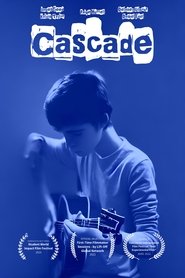
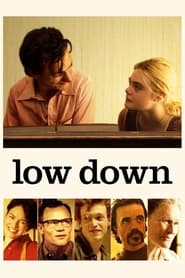
After a close friends suicide; Will, a Punk and Post-Punk musician living in the US is struggling with doubts about his relationship, his identity and ultimately what he wants to do in life. Will becomes isolated, reliant on substances and is sent down a path of pain, suffering and existential terror.
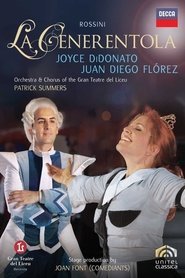
This is an excellent version of one of the greatest of all comic operas, featuring superb singing and orchestral playing. And it's not just the two headliners; listen, for example, to the entrance of the stepsisters at the beginning of Act One. Nevertheless, some viewers may find the staging problematic, with singers in clown-like costumes and sets featuring human-sized rodents. Those seeking a more conventional production might want to consider the Houston Grand Opera DVD, also on Decca, with Cecilia Bartoli and Raul Jimenez. Both sets are wonderful, but, for me, Joyce Didonato and Juan Diego Florez are slightly to be preferred. Highly recommended.
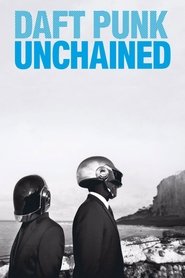
Daft Punk Unchained is the first film about the pop culture phenomenon that is Daft Punk, the duo with 12 million albums sold worldwide and seven Grammy Awards. Throughout their career Thomas Bangalter and Guy-Manuel de Homem-Christo have always resisted compromise and the established codes of show business. They have remained determined to maintain control of every link in the chain of their creative process. In the era of globalisation and social networks, they rarely speak in public and neither do they show their faces on TV. This documentary explores this unprecedented cultural revolution revealing a duo of artists on a permanent quest for creativity, independence and freedom.
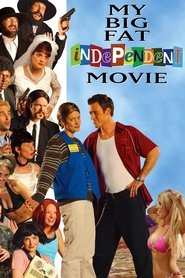
This hilariously smart satire tells the story of Johnny Vince, a swingin' hepcat who meets hitman Sam and Harvey on a road trip to pull a "botched robbery" in Las Vegas. Along the way they take a deeply unfulfilled not-so-good-girl hostage, encounter the mysterious Mechanic, get harassed by a foul-mouthed answering machine... and did we mention the lesbians? The result - hilarity ensues!
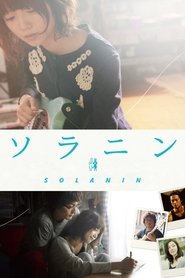
Meiko and Taneda are a couple graduated from university two years ago. Unhappy with their lives, Meiko quits her job and encourages Taneda to have his band become professional.
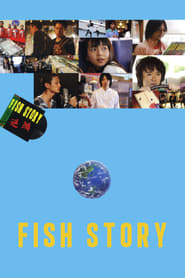
A rock band writes a song called "Fish Story" that is foretold to save the world. The song exceeds the boundaries of space and time and ties people and their stories together.
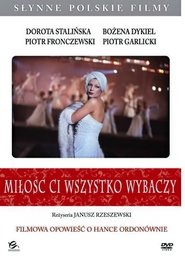
Hanka Ordonówna is a star of pre-war Polish cabarets. The film begins in 1942 in the Middle East, in a British military camp located near the front line. Hanka runs a shelter for homeless Polish children. In her moments of respite, the singer, who is suffering from tuberculosis, recalls the various stages of her career.
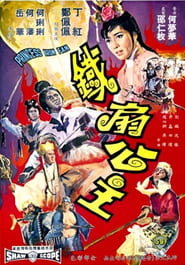
The mythological tale of a quest from China to India to bring back Buddhist scriptures, famous for the adventures of Sun Wukong, the notorious Monkey King.
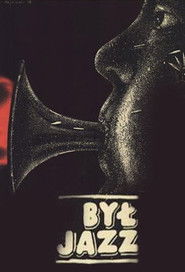
Set in 1952, film tells the story of young musicians playing - then forbidden - jazz music in basements and attics around Poland. The group hires itself to social parties, youth dances, etc, each time waiting for the management to disappear in order to shift gears to hot music. The crowd either loves it or does not know what to do. Occasionally they are harassed by the police.
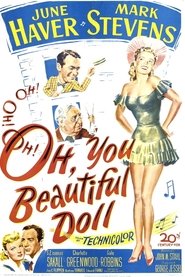
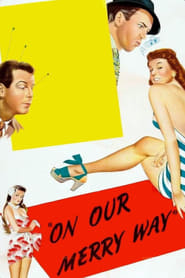
Oliver Pease gets a dose of courage from his wife Martha and tricks the editor of the paper (where he writes lost pet notices) into assigning him the day's roving question. Martha suggests, "Has a little child ever changed your life?" Oliver gets answers from two slow-talking musicians, an actress whose roles usually feature a sarong, and an itinerant cardsharp. In each case the "little child" is hardly innocent: in the first, a local auto mechanic's "baby" turns out to be fully developed as a woman and a musician; in the second, a spoiled child star learns kindness; in the third, the family of a lost brat doesn't want him returned. And Oliver, what becomes of him?
Franco Zeffirelli directs these two legendary La Scala productions telling tragic tales of jealousy. Mascagni's Cavalleria Rusticana features performances by Elena Obraztsova, Plácido Domingo, and Renato Bruson. Leoncavallo's I Pagliacci stars Teresa Stratas, Plácido Domingo, and Juan Pons. Both are conducted by George Pretre. This production of Pagliacci earned director Franco Zeffirelli the coveted Emmy as Best Director in the category of Classical Music Programming.
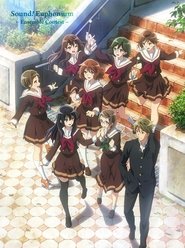
Awaiting new club leader Kumiko is the Ensemble Contest, and the school's preliminary competition to determine the representative team to participate. Kumiko tries her best to make it to the preliminaries without incident, but the concert band club is so large that there seems to be no end to the problems. And as club leader, she finds herself busy consulting on all sorts of matters. While the other members are deciding on their teams, Kumiko herself hasn't even decided which she will join...
Anar, who has just been released from prison, is betrayed by his friend Ahmed and realizes that prison is more just than freedom. This situation leads to the destruction of the protagonist himself.
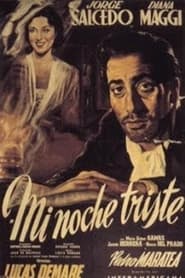
The plot reflects the figure of Pascual Contursi, tango poet. In love with a singer, he leaves his wife and son to go with her. Some time later, the singer leaves him and he composes the tango that gives the film its title.
We have detected that you are using an ad blocker. In order to view this page please disable your ad blocker or whitelist this site from your ad blocker. Thanks!